
Vendor Management · For vendors
How to Track Which Events Made You Money (and Get Invited Back)
Track profit per market and festival, then use those numbers and a short follow-up to become the vendor organizers invite first next season.
Feelings Are Not a P&L
Introduction
A sunny market with kind customers can still be a $40 day after gas. A quieter Tuesday farmers market can be the best hourly rate on your calendar. If you do not write the numbers down the night you unpack, you will apply next year on memory, and memory is loyal to the event with the better playlist.
This guide covers a simple per-event record, how to read it after a handful of dates, and how returning-vendor invites actually happen: organizers keep history, and they email the booths that showed up, paid, and did not ghost.
Why Tracking Is How You Design a Season
Booth fee is often only 20 to 40 percent of true cost. Without travel, labor hours, and cost of goods, every event looks like it "went okay." Craft-fair ROI writeups use cash profit, profit after a labor rate, and revenue per hour on site so you can compare a 6-hour market to a 14-hour festival Saturday.
Patterns show up fast: Saturday vs Sunday, indoor vs outdoor, city vs suburb, first-year vs tenth-year. You will also see that two or three events carry the year while others never clear a reasonable hourly rate. Those are the ones to stop applying to, even if you like the people.
Organizers are doing a parallel version of this. They note who loaded in on time, who had operational issues, and who they would invite again. Vendors who treat the weekend as a relationship (clear communication, a follow-up, a complete application next time) land on that short list. Vendors who only appear when the public form opens compete with everyone else.
Key Numbers to Capture Per Event
Money
Gross sales, cost of goods for what sold, booth and add-on fees, travel, lodging, helpers, card fees. Cash profit is gross minus those. Optional: assign an hourly rate to your hours and see if the day still wins.
Operations
Hours including drive and setup, weather, booth number or zone, power quality, neighbor mix, and whether you would return at this fee. One line of notes beats a paragraph you will not write.
Relationship
Did you thank the organizer? Did they ask you back? Did you send the COI on time? That column predicts invites better than a single sales spike.
6 Steps From Sunday Night to Next Season
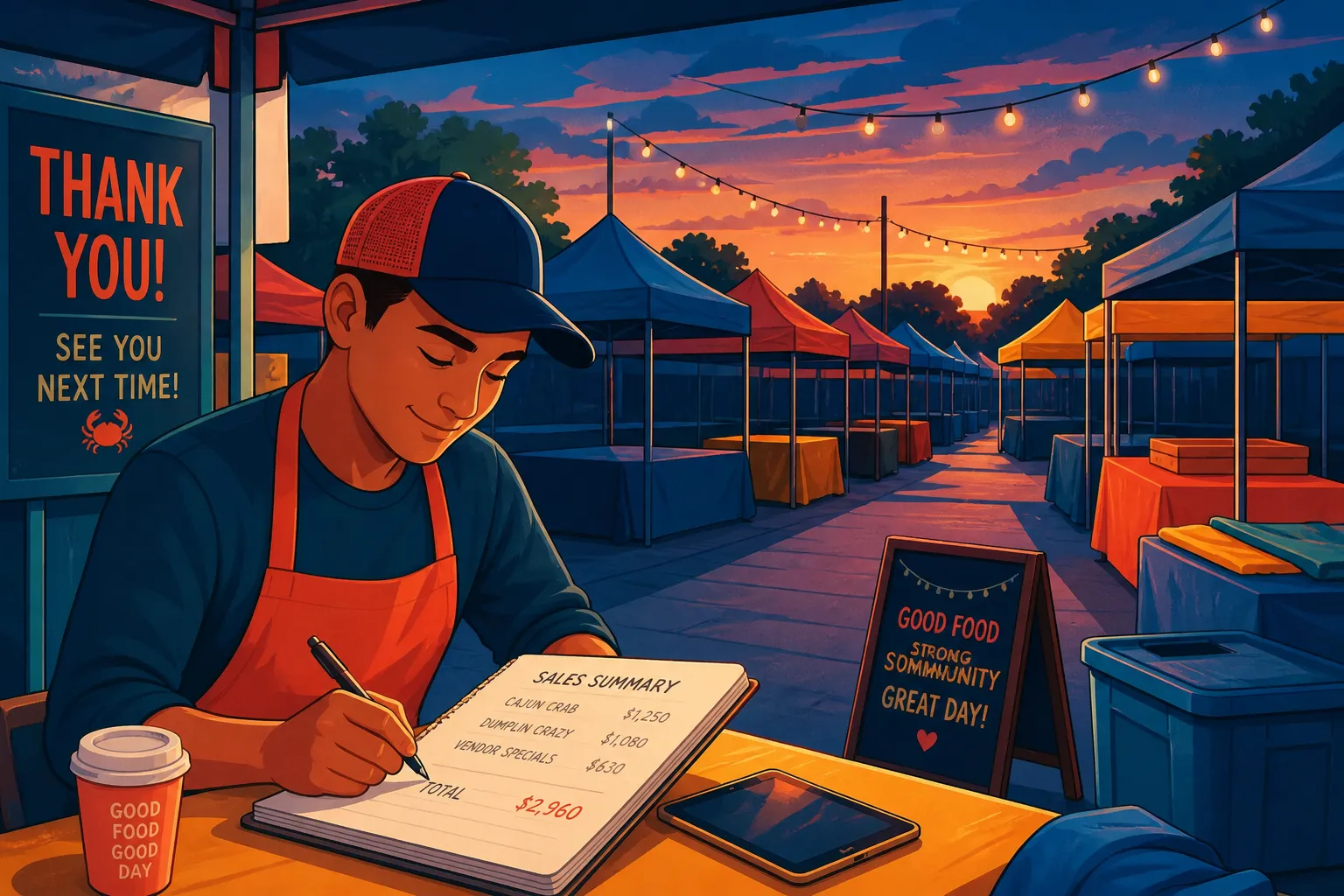
- Log the same night. Use one row per date: event, fee, sales, expenses, hours, net, notes. Waiting a week means you guess.
- Compute cash net and hourly. Hourly = cash net / hours. Sort the season by that column when you have five or more rows.
- Tag the format. Market, festival, pop-up, indoor, outdoor. Your best format is a finding, not a personality trait.
- Send one follow-up within three days. Thank you, one sentence about the day, one sentence if you want to return. Ask if returning applications will open before the public form. Organizers remember the vendors who write.
- Update the public profile. New booth photo, cities you travel, category. The next invite is easier if they can forward your page. See vendor profiles.
- Apply first to last year's winners. Use event fit and break-even on new listings. Do not refill the calendar with events your sheet already failed.
Questions Vendors Ask After the Weekend
- Do I count unsold inventory as a cost this weekend or only when it spoils?
- Should a wholesale order that started at the booth count for this event?
- How many bad weather days before I drop an outdoor series?
- If net was fine but I hated the load-in, is that a no?
- When do I ask for a larger booth or a corner based on selling out?
Tips for Success
Do Not Kill a New Event After One Date
Weather, a competing downtown festival, and a bad pin can wreck a Saturday. Use two or three data points unless the organizer was chaotic or the fee cannot work even on a perfect day.
Be Easy to Rebook
Pay on time, answer email, stay until close, and send the certificate before the deadline. Those are the notes on your record. They are also how you get the better booth next year.
Share Useful Feedback Once
If the map had a dead row, say so once, specifically, after the event. Complaining at 8 a.m. during load-in is how you get remembered for the wrong reason.
Let the Sheet Pick Next Year
The goal is not more weekends. It is a short list of events that pay you and organizers who want you on the map before they open the form to the internet.
FestKit is where those two records meet: your public profile for the invite, and event listings when you are the one hunting. Start with vendor profiles and keep the season honest on paper.
Vending this season? Publish your profile on FestKit so organizers can find you, then browse events that are taking applications. See vendor profiles.