
Virginia
Planning a Festival in Richmond
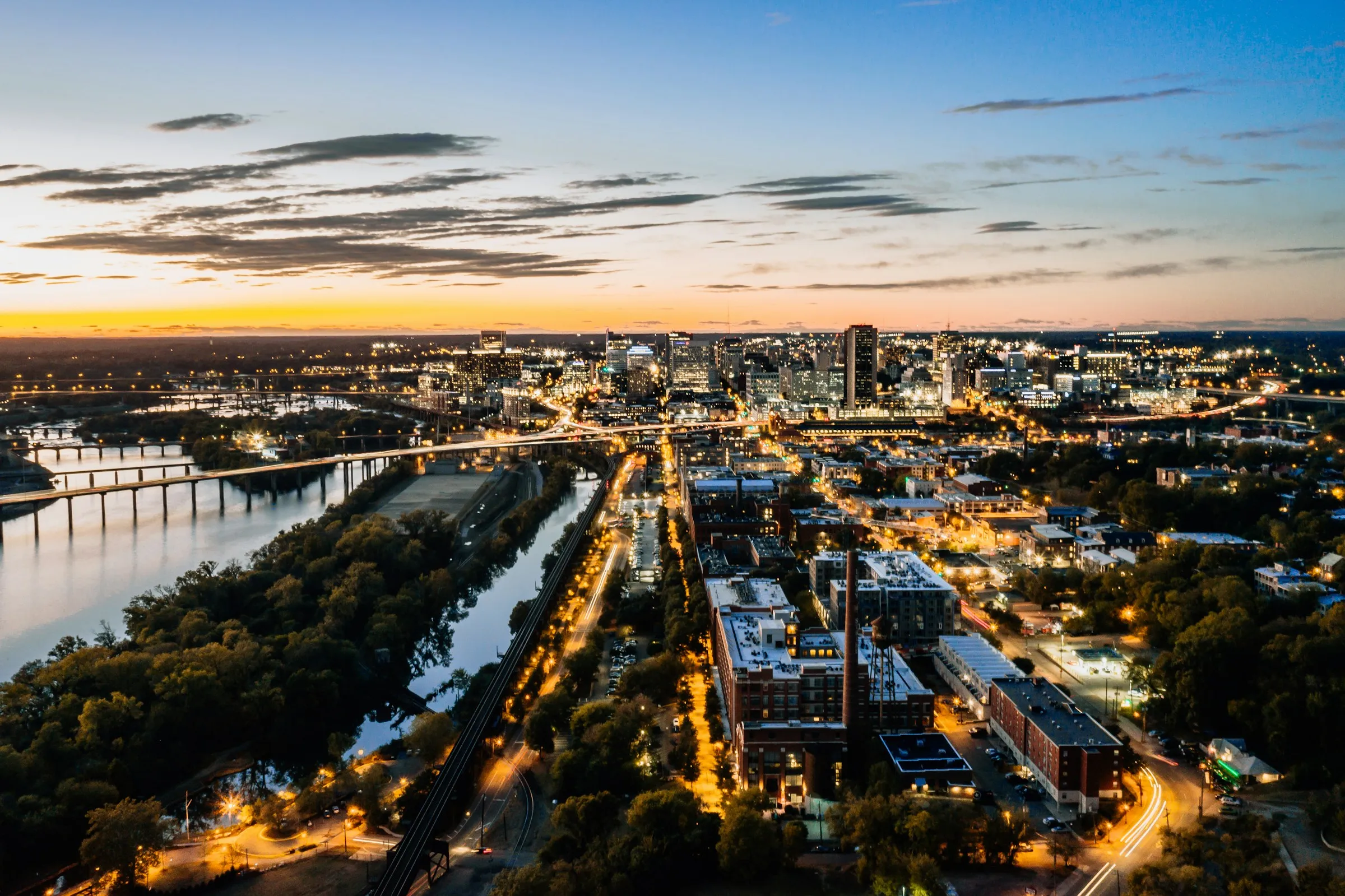
Richmond is a rising star in the Southeast festival scene, drawing over 500,000 attendees annually to events along the James River and throughout its historic neighborhoods. From the Richmond Folk Festival to Dominion Energy Riverrock, this guide covers everything you need for festival planning in Richmond: venues, permits, vendors, and local insights.
Top Venues & Outdoor Spaces
Waterfront · 8,000-10,000
Downtown riverfront island and Richmond's premier outdoor music and events venue. Home to the Richmond Folk Festival, Dominion Energy Riverrock, and Friday Cheers concert series, with established multi-stage infrastructure and James River views.
Park · 5,000-15,000
287-acre urban park with three lakes, trails, and the Dogwood Dell amphitheater (2,400 permanent seats). Home to the Festival of Arts since 1956, with proven infrastructure for large-scale outdoor programming.
Park · 2,000-5,000
100-acre historic estate with manicured gardens, multiple lawn venues, and the 22,000 sq ft Robins Nature Center. Flexible spaces accommodate everything from intimate cultural events to large corporate festivals.
Richmond Raceway Complex
Arena · 10,000-60,000
Multi-use entertainment complex with a 60,000-seat oval, infield areas, and surrounding parking lots suitable for large-scale festivals, concerts, and multi-day events with built-in infrastructure.
Fairgrounds · 5,000-15,000
Traditional fairground facility south of Richmond with flat acreage, parking, and utility hookups. Ideal for multi-day festivals, county fairs, and events needing dedicated vehicle access.
Libby Hill Park
Park · 1,000-3,000
Hilltop park in Church Hill with panoramic views of the James River and downtown skyline. Compact green space perfect for boutique festivals, cultural gatherings, and community events with a dramatic backdrop.
Notable Festivals & Events
Cultural · October · 220,000+
Free three-day celebration on the downtown riverfront featuring six stages, 30+ artists from diverse traditions, dance, crafts, storytelling, and regional cuisine. One of Virginia's largest annual festivals.
Multi-genre · May · 30,000+
The nation's premier outdoor sports and music festival, combining trail running, mountain biking, paddling, climbing, and live music along the James River over three days.
Arts · May · 25,000+
Nationally recognized outdoor art show at the Carillon in Byrd Park featuring hundreds of artists displaying fine art, metalwork, pottery, jewelry, and weavings alongside local food vendors.
2nd Street Festival
Cultural · October · 40,000+
One of the largest African American street festivals on the East Coast, held in historic Jackson Ward. Two days of live music, dance, food, and community celebration honoring Richmond's Black cultural heritage.
Carytown Watermelon Festival
Food & Drink · August · 100,000+
Richmond's beloved single-day street festival stretching across the Carytown shopping district. Watermelon-themed food, live music, local vendors, and family activities draw massive crowds each August.
Multi-genre · September - October · 250,000+
Annual state fair at The Meadow Event Park featuring agricultural exhibits, carnival rides, live entertainment, food competitions, and livestock shows over multiple weeks.
Friday Cheers
Music · May - June · 3,000+ weekly
Richmond's longest-running outdoor concert series on Brown's Island, featuring regional and national acts every Friday evening from May through June. Free admission with food and drink vendors.
Local Vendors & Services
Stage & Sound
Full-service event production company offering lighting design, live sound, video, staging, and draping for festivals, concerts, and large outdoor events.
Stage & Sound
Virginia's premier audio and lighting supplier with 45+ years serving the Richmond area. One-stop shop for sound systems, lighting rigs, and production equipment rental.
Tent & Structure
Family-owned rental company with the largest linen inventory in the region. Provides tents, tables, chairs, staging, dance floors, catering equipment, and luxury restroom trailers.
Equipment Rental
Full-service event rental company offering tables, chairs, linens, tents, staging, and specialty items for festivals and large outdoor events across the Richmond metro.
Catering
Richmond-based full-service catering and event planning company with 20+ years of experience. Handles catering, design, rentals, and lighting for events of all sizes.
Portable Restrooms
Portable restroom and sanitation services for outdoor festivals, concerts, and large public events throughout the Richmond metro area.
Permits & Regulations
City of Richmond Department of Parks, Recreation & Community Facilities
Special Events Request Form required for events with 300+ attendees, public advertising, food/beverage sales, or amplified sound. Submit at least 45 days in advance. Requires general liability insurance naming the City as additional insured. Contact RVASpecialEvents@rva.gov or (804) 646-0761.
Official permit informationEvents taking vendors in Virginia
Every Virginia festival, craft fair, farmers market and pop-up listed on FestKit, with booth details, application deadlines, and how to apply.
Browse vendor events in VirginiaPlanning your Richmond festival?
Open applications, fill the booths, and run opening day from one live event plan.
You're planning a festival in Richmond, and you've landed on a city that punches well above its weight. More than 220,000 people descend on the downtown riverfront each October for the Richmond Folk Festival alone, and that's just one weekend on a calendar packed with outdoor events year-round. Richmond doesn't need convincing when it comes to festivals. The audience is already here.
What makes Richmond work for organizers is a combination that's hard to replicate: a compact, walkable downtown wrapped around the James River, a deep bench of parks and outdoor spaces built for public gatherings, a city government with a clear permitting process, and a cultural identity rooted in food, music, and street art. Whether you're planning a 1,000-person art festival in Church Hill or a 50,000-person music event on Brown's Island, this guide covers the venues, permits, vendors, weather, and local insights you need to get it done.
Why Richmond for Festivals
Richmond's festival culture is built on a foundation that few mid-size cities can match. The James River runs through the heart of downtown, providing not just scenery but a genuine outdoor recreation ecosystem: class IV whitewater rapids, 52+ miles of trails through the James River Park System, and islands accessible by foot from the city center. That natural infrastructure is why Dominion Energy Riverrock can combine mountain biking, paddling, and live music into a single weekend festival, and why the Richmond Folk Festival's riverfront stages feel like they were designed for the event.
The city earned the number one spot on CNN Travel's list of America's Best Towns to Visit in 2024, with food and drink cited as the primary draw. That recognition reflects what locals already know: Richmond's culinary scene spans James Beard-recognized restaurants, a thriving food truck community, and cultural cuisines from its growing Latin American, Vietnamese, and Ethiopian communities. For festival organizers, that means a deep, diverse pool of food vendors ready to participate.
Richmond's arts culture runs equally deep. The city hosts over 100 murals from the Richmond Mural Project, 70+ galleries concentrated around the Arts District, and a First Fridays gallery walk that draws thousands monthly. Historic Jackson Ward, once known as the "Black Wall Street of America," anchors a cultural calendar that includes the 2nd Street Festival and a year-round music scene spanning hip-hop, indie rock, bluegrass, and gospel. This isn't a city where you have to manufacture culture for your event. You just have to tap into what's already here.
Best Venues & Outdoor Spaces
Richmond's venue landscape spans downtown riverfront stages, 287-acre parks, and rural fairgrounds, so matching your event's scale to the right space is the first critical decision. Your venue choice drives everything from your site map layout to your vendor placement strategy, so take this seriously.
Brown's Island is the proven headliner. This downtown riverfront island hosts the Richmond Folk Festival, Dominion Energy Riverrock, and the Friday Cheers concert series, with multi-stage infrastructure already in place. It accommodates 8,000-10,000 attendees with the James River as a natural backdrop, and its walkability from downtown hotels and parking makes attendee logistics straightforward. The trade-off is limited back-of-house space, so plan your layout carefully to avoid the mistakes that eat into your usable footprint.
Byrd Park and Dogwood Dell offer a different kind of scale. At 287 acres with three lakes and the Dogwood Dell amphitheater (2,400 permanent seats), this is where you go for events that need room to breathe. The park has hosted the Festival of Arts since 1956, so the infrastructure is battle-tested. Sound carries well in the Dell's natural bowl, but the residential surroundings mean noise management needs attention.
Maymont, the 100-acre historic estate, is the upscale option. Multiple lawn venues, gardens, and the 22,000 sq ft Robins Nature Center give you flexibility for events from 500 to 5,000. It's ideal for food and wine festivals, arts programming, or corporate events where atmosphere matters as much as capacity.
For raw scale, Richmond Raceway Complex (60,000 seats) and The Meadow Event Park in Doswell (home of the State Fair) both offer the acreage, parking, and utility hookups that multi-day festivals demand.
Navigating Permits & Regulations
Richmond's permitting process is manageable if you start early and stay organized. For a broader overview of what festivals typically require, see our complete permits and licensing guide. Here's the Richmond-specific breakdown.
The core permit is the Special Events Request Form, administered by the Department of Parks, Recreation & Community Facilities. You need this if your event has 300+ attendees, involves food or beverage sales, uses amplified sound, or impacts public property. Submit at least 45 days before your event date. The Special Events staff at (804) 646-0761 or RVASpecialEvents@rva.gov can walk you through requirements specific to your event.
Insurance is required. You'll need general liability coverage naming the City of Richmond as additional insured. Get your insurance broker engaged early because this is a prerequisite for everything else in the process.
Street closures require a separate permit through the Richmond Police Department's Special Operations Division. Submit at least 15 business days in advance with petition signatures from affected property owners and proof of insurance. You're responsible for installing "No Parking" signs at least 48 hours before the event. Local and dead-end streets are typically approved; major arterials require extensive evaluation by Traffic Engineering.
Alcohol permits run through the Virginia ABC. Event catering licenses cover wine, beer, and mixed beverages for on-premise consumption. You must notify Virginia ABC in writing at least two calendar days before your event with date, time, location, and sponsor details. Limited caterer licenses restrict you to 12 events per year. A digital site map showing alcohol service zones makes this process significantly easier.
Fire safety permits are required for food trucks and any setup involving tent structures, amplified sound, or combustible materials. Submit at least 10 days before the event. Food trucks specifically need LPG compliance documentation, fire extinguisher verification, and hood system specifications.
Pro tip: The city's RVAgreen Sustainability Initiative actively encourages events to incorporate recycling and waste reduction. Building sustainability into your planning from the start isn't just good practice; it can smooth the permitting conversation.
Weather & Seasonal Planning
Richmond's humid subtropical climate gives you a generous outdoor season, but each window has distinct characteristics.
April-May is the prime window. Temperatures range from 62-77°F, humidity is moderate, and Richmond's flowering gardens (cherry blossoms, dogwoods, azaleas) provide stunning natural backdrops. Dominion Energy Riverrock and Arts in the Park both target May for good reason. The only risk is an occasional cold snap in early April.
June-August brings heat and humidity. Expect highs around 85°F with humidity that makes it feel hotter. Afternoon thunderstorms are frequent from mid-June through August, usually brief but intense. Plan covered areas, hydration stations, and a weather delay protocol. The Richmond Folk Festival addresses this with four tented stages that keep performances running through rain.
September-October is the second prime window and arguably the best. Temperatures cool to the 60-75°F range, humidity drops, and fall foliage creates a photogenic backdrop. October has the lowest precipitation probability of any month (around 20% on any given day). The Folk Festival and 2nd Street Festival both target October, and it's no coincidence.
November-March is feasible but attendance drops. Winter highs of 48-55°F are mild by Northeast standards, but cold rain is a real risk. Indoor-outdoor hybrid formats or holiday-themed programming work better in this window.
Local Food, Music & Culture
Richmond's food identity is what sets it apart from other mid-size festival cities. The culinary scene spans James Beard-recognized restaurants like Brenner Pass and ZZQ, a massive food truck community, and neighborhood cuisines reflecting the city's diversity: Jamaican in Church Hill, Vietnamese along Broad Street, Ethiopian in the Fan, and Afghan fine dining at Mantu. For food festivals, lean into the hyper-local: Virginia barbecue traditions, craft beer from Scott's Addition's 20+ breweries, and the city's obsession with brunch culture. If you're building your vendor roster from scratch, our guide on how to recruit food vendors covers how to find them and keep them coming back.
Music-wise, Richmond spans genres without a single dominant identity. The hip-hop scene is nationally recognized, the bluegrass and folk tradition runs deep through Virginia, and the indie rock pipeline from venues like The Broadberry and The Camel feeds a reliable talent pool. Gospel and R&B are strong thanks to Richmond's church culture, and Latin music (reggaeton, bachata) draws growing, engaged audiences. Don't program to just one genre; Richmond's audience is too eclectic for that.
The street art and mural scene is a genuine differentiator. The Richmond Mural Project has produced 100+ large-scale works across the city, and the annual RVA Street Art Festival brings international artists to create new pieces live. For festival organizers, this means built-in visual culture that you can incorporate into branding, social media, and wayfinding without manufacturing it from scratch.
Logistics & Transportation
Richmond's compact footprint makes load-in manageable if you plan your routes.
Load-in/load-out for downtown venues uses I-95 and I-64 as primary access corridors. Brown's Island has service access through downtown streets, but coordinate timing with your Special Events permit to minimize conflicts. Byrd Park's residential setting means early-morning load-in before neighborhood traffic builds. For a full breakdown of what production and logistics costs look like, check our festival budget planning guide.
Attendee transportation centers on GRTC (Greater Richmond Transit Company), which runs buses from 5 a.m. to 1 a.m. daily. The Downtown Transfer Station connects major routes to festival venues. Ride-share works well in the downtown core. For venues outside the city (Meadow Event Park, Chesterfield Fairgrounds), plan shuttle service. The Richmond Folk Festival runs a dedicated $5 roundtrip shuttle on festival weekends.
Hotels cluster downtown (The Jefferson Hotel, Quirk Hotel, Graduate Richmond) and along I-64 and I-95 corridors. For multi-day festivals expecting out-of-town attendees, negotiate room blocks early. Richmond's convention calendar and university events fill hotels faster than you'd expect for a city this size.
Power at city parks requires generator rental unless you've arranged utility tie-ins through your permit. Richmond Raceway and The Meadow Event Park have built-in power infrastructure. Budget for generators at Brown's Island, Byrd Park, and Libby Hill Park.
Tips from Local Organizers
- Start your city permit conversation early. The 45-day minimum is a floor, not a target. Complex events with street closures, alcohol service, and multiple vendors should begin conversations 90+ days out. The Special Events staff are helpful, but they're coordinating across multiple departments.
- Don't underestimate the James River as programming. Richmond is the only city in the US with class IV whitewater rapids in its downtown. Riverrock has proven that integrating the river into festival programming (kayak demos, SUP races, fishing tournaments) creates a draw that no other city can replicate.
- Jackson Ward and Scott's Addition are your grassroots marketing channels. Jackson Ward's cultural institutions and Scott's Addition's brewery density put you in front of Richmond's most engaged festival-going demographic. Brewery tap takeovers and community partnerships here outperform digital advertising for local awareness.
- Plan for the October sweet spot. If you have scheduling flexibility, October gives you the best weather, the lowest rain probability, and an audience already primed for festival season by the Folk Festival and 2nd Street Festival. Get your vendor contracts signed early because the best local vendors book up fast.
- Sustainability isn't optional. Richmond's RVAgreen initiative means the city actively evaluates your environmental plan during permitting. Incorporating recycling, waste reduction, and eco-friendly transportation into your plan from day one, following sustainable festival planning practices, demonstrates good faith and can streamline approvals.
Ready to Plan Your Richmond Festival?
Richmond has the rare combination that makes festival planning rewarding: a city built around a river, a culture that shows up for outdoor events, and an infrastructure that supports everything from a 1,000-person art walk to a 220,000-person folk festival. The audience isn't hypothetical. They're already filling Brown's Island every Friday in May, packing Carytown for watermelons in August, and lining the riverfront six stages deep in October.
Whether you're launching your first festival or bringing an established concept to a new market, Richmond gives you the venues, the vendors, and the cultural foundation to build on. And if this is your first event, our first-year festival guide covers how to compete with established festivals from day one.
Tools like FestKit can help you map your site, manage your vendors, and share interactive maps with attendees so you can focus on the programming that makes your festival worth attending.
Ready to start planning? List your event on FestKit and take vendor applications for free. The site plan and live attendee maps are there when you want them. Start free.
Free to list · Free to take applications
Open applications.
Start filling the roster.
Get discovered by vendors, collect what they owe, and keep every application moving. Start free. Upgrade when you are ready to coordinate opening day across every event.
$0 to start
and it never expires
Self-serve
set up in minutes
14-day trial
of everything else
2% on vendor payments · No subscription required