
Festival Planning · For organizers
Festival Permits and Licensing: A Step-by-Step Guide for Organizers
Learn which festival permits you need, when to apply, and how to navigate licensing requirements so your event stays legal and on schedule.
Every Successful Festival Starts With the Right Permits
Introduction
You've booked the headliner, designed the site layout, and started selling tickets. Then someone asks: "Did you get the noise permit?" Festival permitting is the part of event planning nobody gets excited about - but it's the one thing that can shut your event down before a single attendee walks through the gate.
The permitting process is complex because it touches every government agency with jurisdiction over your site: fire, health, police, parks, and more. The good news is that it's entirely manageable once you understand what's required, who to talk to, and when to start. This guide breaks down the permits most festivals need and gives you a timeline to keep everything on track.
Why Permits Matter More Than Paperwork
Festival permits aren't bureaucratic box-checking. They're the mechanism that coordinates city services around your event - traffic control, emergency response, sanitation, and public safety all hinge on what's in your permit applications. Municipalities use them to understand your event's footprint and ensure it won't put attendees or surrounding communities at risk.
Operating without the right permits carries real consequences: fines, forced shutdowns mid-event, and liability exposure that insurance won't cover. Worse, permit violations create a reputation with local authorities that makes future events harder to approve. The organizers who build strong relationships with city officials from day one consistently report smoother approvals and fewer surprises on event day.
Key Permit Types You'll Need
Special Event Permit
This is your foundational permit - the one that coordinates requirements across multiple city departments. Most jurisdictions require it when your event uses public streets, draws crowds above a threshold (often 300+ people), requires police or fire resources, or extends past daylight hours. Applications typically ask for your event description, expected attendance, detailed site plan, and proposed timeline. Some cities accept applications up to a year in advance, reviewing them on a first-come, first-served basis.
Temporary Food Service Permits
Any festival with food vendors triggers health department oversight. Both the event organizer and individual food vendors usually need separate applications - submitted 15 to 30 days before the event. Health inspectors evaluate food prep facilities, storage temperatures, handwashing stations, and sanitation infrastructure. Vendors cannot open until they pass a pre-event inspection. Budget time to communicate these requirements to every food vendor well before their deadlines.
Liquor License
Alcohol service adds the most complexity to your permit stack. Requirements vary dramatically by state and municipality: some issue special event retailer licenses for as little as $25, while others require applications 60 to 90 days in advance through a state liquor board that meets monthly. Many jurisdictions require alcohol sales within defined beer-garden areas, backed by detailed site maps showing exactly where alcohol will be served. Dram shop insurance - protecting against liability from over-service - is almost always mandatory.
Noise and Amplified Sound Permits
Live music means noise permits. These address community impact by specifying allowed decibel levels, amplification hours, and stage curfews. Obtaining them often requires a public hearing before a city council or licensing board, and these boards may meet infrequently. File your noise variance request several months out - at least one regional festival nearly lost its headliner because the noise permit arrived at the last minute.
Fire Marshal and Structural Permits
Tents over 400 square feet, temporary stages, and generator setups all require fire marshal approval. Applications need detailed site plans, flame-spread certification for all tent materials (NFPA 701), and documentation of fire extinguisher placement. Generators must be separated from tents by at least 20 feet and isolated from public access. Submit applications at least 10 days before your event, though earlier is better for complex setups.
6 Steps to Navigate the Permitting Process
-
Start 6-12 months out. Schedule preliminary meetings with your city's special events coordinator, fire marshal, health department, and police liaison. Identify every permit you'll need and note each agency's specific deadlines.
-
Submit complex permits first. Mass gathering permits, special event permits, and liquor licenses have the longest lead times - some require 90+ days. Get these in the queue before anything else.
-
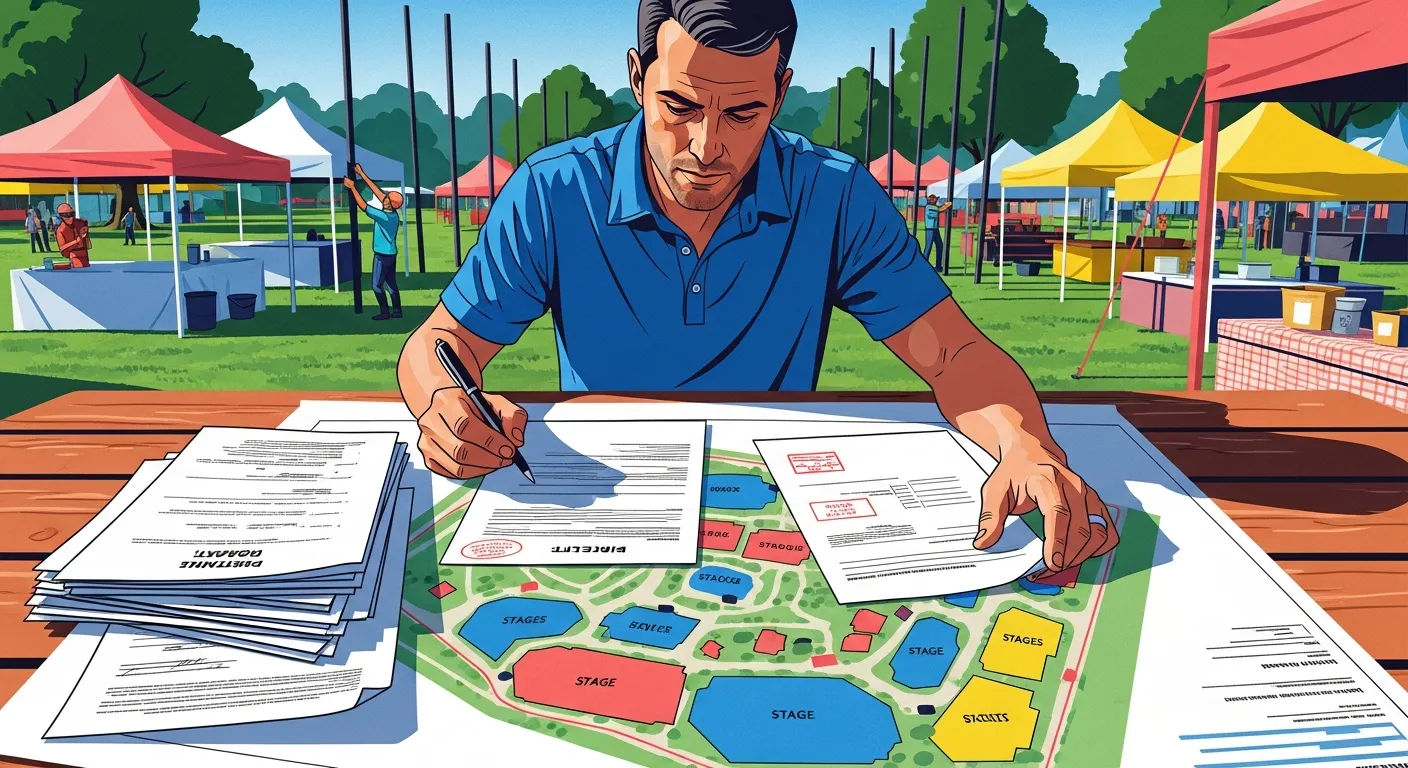
Build your site plan early. Nearly every permit application asks for a site plan showing vendor locations, emergency access routes, stage positions, and utility connections. A clear, accurate map speeds up every approval. Digital mapping tools let you iterate without starting over and share plans with multiple agencies simultaneously.
-
Confirm vendor responsibilities. Food vendors need their own temporary food permits. Alcohol vendors may need separate licenses. Sound contractors need to understand decibel limits. Don't assume vendors know what's required - send them a checklist with deadlines.
-
Notify your neighbors. Many jurisdictions require written notice to surrounding residents and businesses 45 to 60 days before the event. Even when it's not legally required, proactive neighbor communication prevents complaints that can complicate permit renewals.
-
Follow up relentlessly. Permit applications sit in queues. Call or email every agency 2-4 weeks after submission to confirm receipt, ask about timeline, and address any requests for additional information. Squeaky wheels get permits.
Common Questions Organizers Ask
-
How far in advance should I really start? Six months minimum for a mid-size festival. Twelve months if you're dealing with liquor licenses, mass gathering permits, or a venue that requires zoning variances.
-
What if my city doesn't have a clear special events process? Start with the city clerk's office or city manager. Ask specifically: "Who handles special event permits?" In smaller municipalities, one person often coordinates everything.
-
Do I need separate permits for each vendor? Usually yes for food and alcohol vendors. The event organizer files the umbrella special event permit, but individual vendors file their own health department and liquor applications.
-
What's the most common reason permits get denied? Incomplete applications - missing site plans, inadequate insurance documentation, or vague event descriptions. Agencies deny what they can't evaluate. Submit thorough, detailed applications with professional-quality site maps.
-
Can I start setting up before all permits are approved? Risky. If a permit is denied or delayed, you may need to tear down structures or cancel activities you've already invested in. Get written approvals before committing to load-in.
Expert Tips for a Smoother Process
Treat Officials as Partners, Not Obstacles
The organizers with the best approval track records are the ones who invite fire marshals and health inspectors to pre-planning walkthroughs. When officials feel included in the planning process - not surprised by it - they become invested in your event's success. A 30-minute site walk with your fire marshal can prevent weeks of back-and-forth on your application.
Build a Permit Tracker
Create a spreadsheet listing every permit, its issuing agency, application deadline, submission date, status, and approval date. When you're juggling 8-12 permits across 5+ agencies, a centralized tracker prevents deadlines from slipping. Share it with your team so everyone knows what's pending.
Keep Copies of Everything On-Site
During the event, keep physical and digital copies of every approved permit, insurance certificate, and inspection report accessible at your command center. Inspectors may visit unannounced. Having documentation ready demonstrates professionalism and prevents unnecessary delays.
Your Permits Are the Foundation - Build on Them Early
The permitting process isn't glamorous, but it's the foundation every other operational decision rests on. Your vendor contracts, site layout, security plan, and production schedule all depend on what your permits allow. Start early, submit thorough applications, and build relationships with the agencies that approve them.
The organizers who treat permitting as a first-priority planning task - not a last-minute scramble - consistently run smoother events with fewer surprises. Your future self on event day will thank you.
Running an event? List it on FestKit and take vendor applications for free. The site plan and live attendee maps are there when you want them. Start free.