
Industry Trends · For organizers
Sustainable Festival Planning: Practical Steps to Reduce Your Event's Footprint
Learn practical sustainable festival planning strategies that reduce waste, cut energy costs, and improve your event's environmental impact without breaking the budget.
Your Festival's Environmental Impact Is Bigger Than You Think - Here's How to Shrink It
Introduction
UK music festivals alone produce 23,500 tonnes of waste annually. In the US, major events like Coachella generate roughly 100 tonnes of solid waste per day. And waste is just the visible problem - energy consumption, transportation emissions, and water usage multiply the footprint further.
The good news? Sustainability isn't just an ethical choice - it's a financial one. Festivals that invest in green infrastructure consistently report lower waste hauling fees, reduced fuel costs, and stronger sponsor interest. With 83% of attendees now expecting events to address their environmental impact, going green isn't a niche differentiator anymore. It's table stakes.
This guide covers the practical steps you can take to reduce your festival's footprint - without blowing your budget.
Why Sustainability Matters for Festival Organizers
Festival sustainability goes beyond optics. The average attendee generates about 2kg of waste per day, and a typical festival season accounts for 1.3 million single-use food containers, 2 million plastic bottles, and 875,000 plastic cups. UK festivals emit an estimated 20 kilotonnes of CO2 equivalent on-site, with 65% coming from energy and 35% from waste - and that number triples to 100 kilotonnes when you include attendee travel.
But here's the business case: waste diversion reduces hauling costs, LED lighting slashes generator fuel, reusable cup programs generate deposit revenue, and sustainability certifications attract eco-conscious sponsors willing to pay premium rates. Nearly 50% of festivalgoers say they'd pay more for tickets to an event that demonstrates real environmental impact. Sustainability isn't a cost center - it's a revenue strategy.
Key Strategies for Reducing Your Event's Footprint
Implement Three-Stream Waste Stations
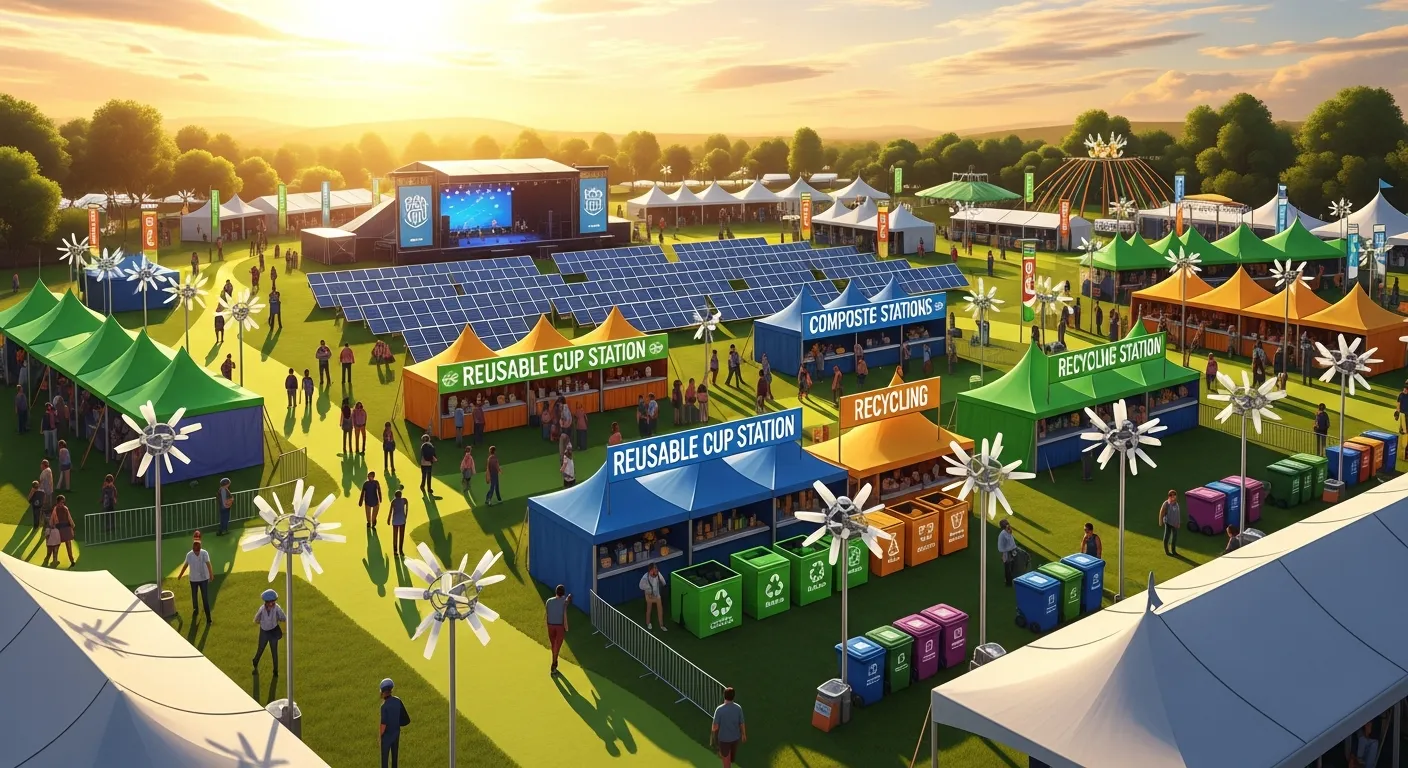
The single biggest lever for waste reduction is proper sorting infrastructure. Set up clearly labeled compost, recycling, and landfill stations throughout your site - the Outside Festival achieved 71% waste diversion with just 40 three-stream stations and less than 5% contamination. The key is signage, station density (one every 50-75 meters in high-traffic zones), and trained "waste ambassadors" stationed nearby during peak hours to guide attendees.
Switch to LED Lighting and Hybrid Power
Energy accounts for 65% of a festival's on-site carbon emissions. Switching stage lighting and floodlights to LEDs can cut fuel consumption dramatically - Greenbelt Festival saved over 2,000 litres of diesel just by upgrading their lighting. Pair LEDs with hybrid generators (diesel + battery storage) and power monitoring tools to right-size your generators. Most festivals run generators at 20-30% capacity because they over-spec for peak load. Monitoring lets you scale down, saving fuel and rental costs.
Require Sustainable Vendor Packaging
Your vendors are responsible for a significant share of festival waste. Set packaging requirements in vendor contracts - require compostable or recyclable materials (CMA-certified where possible), ban polystyrene and single-use plastics, and provide a clear list of approved materials in your vendor information packet. Vet compliance during the application process, not on event day when it's too late.
Invest in Transportation Alternatives
Attendee travel accounts for the largest chunk of a festival's total carbon footprint. Organize shuttle services from nearby transit hubs, designate bike parking areas with secure racks, and incentivize carpooling with discounted parking or priority entry for full vehicles. Promote these options aggressively in pre-event communications - most attendees will use alternatives if you make them easy to find and convenient to use.
7 Steps to Build a Sustainability Program
-
Set measurable goals before you plan anything else. Define specific targets: 60% waste diversion, 30% reduction in diesel use, 25% of attendees arriving via public transit. Vague commitments like "be more green" produce vague results.
-
Audit your current footprint. If this isn't your first year, review last year's waste hauling invoices, generator fuel receipts, and water bills. You can't reduce what you don't measure. First-year events can benchmark against similar-sized festivals.
-
Build sustainability into vendor contracts. Include packaging requirements, waste sorting expectations, and energy-efficient equipment clauses. Vendors who won't comply with basic environmental standards are a liability.
-
Partner with local composting and recycling facilities. Commercial composters, farms (for food waste as animal feed), and recycling cooperatives can dramatically reduce your hauling costs while improving diversion rates. Build these relationships months in advance.
-
Deploy reusable cup and bottle programs. Charge a deposit ($2-5 per cup), offer refund stations, and incentivize returns. Shambhala's reusable programs have eliminated tens of thousands of single-use cups per event while generating net positive revenue from unreturned deposits.
-
Install water refill stations and ban single-use bottles. Position refill points every 100 meters in high-traffic areas. Attendees expect free water access - providing it in a sustainable format eliminates one of the largest waste categories and avoids costly emergency water purchases.
-
Track everything and report honestly. Use event sustainability software or even spreadsheets to track waste weights, fuel consumption, water usage, and transportation data. Post-event reporting builds credibility for sponsors and gives you a baseline for next year.
Common Questions About Festival Sustainability
-
Does going green cost more upfront? Some initiatives require investment (reusable cups, solar rigs, LED upgrades), but most pay back within one to two events through reduced hauling, fuel, and rental costs. Tomorrowland halved its diesel bill by expanding grid electricity and hybrid generators.
-
How do I get vendors to comply with packaging rules? Make it a condition of participation, not a suggestion. Include approved materials lists in your vendor packet and review compliance during the application vetting process. Most professional vendors already use compostable packaging.
-
What if my festival is too small for major infrastructure? Start with the highest-impact, lowest-cost initiatives: three-stream waste stations, LED lighting, and a reusable cup program. Even a 500-person event can achieve 50%+ waste diversion with basic sorting infrastructure and a few trained volunteers.
-
How do I avoid greenwashing accusations? Report real numbers - both wins and shortfalls. "We diverted 71% of waste but had 10% compost contamination" is more credible than "We're committed to sustainability." Attendees and sponsors respect honesty over marketing language.
-
Should I charge attendees a sustainability fee? Some festivals add $1-5 per ticket for environmental programs. If you do it, be transparent about where the money goes and report outcomes. Nearly half of attendees say they'd pay more for a genuinely sustainable event.
Expert Tips for Long-Term Success
Start Early and Build Incrementally
You don't need to be zero-waste in year one. Pick two or three high-impact initiatives, execute them well, and build on them. A festival that achieves 50% waste diversion this year and 65% next year tells a better story than one that promises carbon neutrality and delivers nothing measurable.
Make Sustainability Visible and Fun
The best sustainability programs don't feel like punishment. Run campsite cleanliness competitions, display live waste diversion stats on screens, host repair workshops, and gamify reusable cup returns. Attendees who enjoy participating become advocates - 43% of festivalgoers say they change their environmental behavior after attending a sustainability-focused event.
Use Data to Attract Green Sponsors
Brands want measurable impact to justify sustainability sponsorships. If you can show that your festival diverted 15 tonnes of waste from landfill or saved 3,000 litres of diesel, you have a compelling pitch. Track and document everything from day one - even imperfect data is better than no data.
A Greener Festival Is a Better Festival
Sustainability and profitability aren't competing priorities - they're the same strategy executed from different angles. Every litre of diesel you don't burn, every tonne of waste you divert, and every attendee who carpools instead of driving solo improves your bottom line while reducing your environmental impact.
Start with what you can measure, invest in what saves money, and be honest about the journey. Your attendees, sponsors, and the planet will thank you.
Running an event? List it on FestKit and take vendor applications for free. The site plan and live attendee maps are there when you want them. Start free.