
Illinois
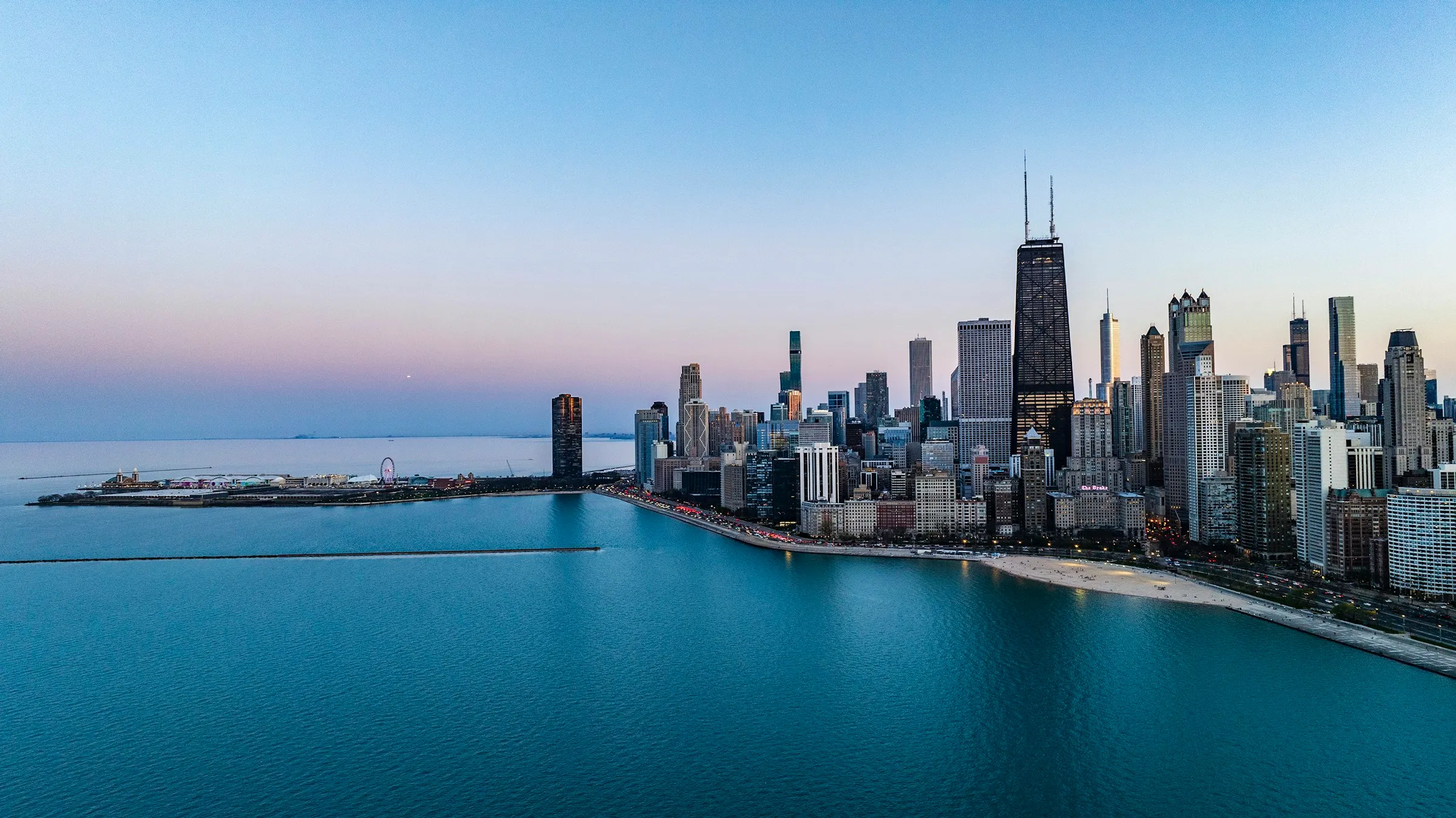
Planning a Festival in Chicago
Chicago hosts 200+ annual festivals drawing millions of attendees, from Lollapalooza's 400,000 to the Taste of Chicago's millions. This guide covers everything you need for festival planning in Chicago: venues, permits, vendors, weather, and local insights from the city that invented house music and perfected the street festival.
Top Venues & Outdoor Spaces
Park · 50,000-400,000
Chicago's 313-acre 'Front Yard' and home to Lollapalooza, Taste of Chicago, and the Grant Park Music Festival. Proven infrastructure for the city's largest festivals with multiple staging areas, Hutchinson Field, and the Petrillo Music Shell.
Park · 11,000
24.5-acre urban park featuring the Jay Pritzker Pavilion with world-class acoustics, Cloud Gate, and Lurie Garden. Home to the Chicago Blues Festival, Jazz Festival, and Grant Park Music Festival's summer concert series.
Waterfront · 10,000-50,000
50-acre lakefront destination with 170,000 sq ft of exhibit space, an 18,000 sq ft ballroom, and outdoor plazas. Nearly 9 million annual visitors and built-in food, retail, and entertainment infrastructure.
Arena · 3,000-4,000
Modern event complex with indoor and outdoor spaces, including The Shed (3,000 standing), the Fairgrounds (4,000 capacity), and a rooftop lounge. Stunning industrial architecture with dedicated loading infrastructure.
Park · 10,000-50,000
Chicago's largest park at 1,200+ acres stretching along the lakefront. Includes North Avenue Beach, open fields, and multiple festival-ready zones. Hosts neighborhood festivals and the Chicago Air and Water Show.
Douglass Park
Park · 20,000-40,000
173-acre West Side park that has hosted Riot Fest and other large-scale music festivals. Flat terrain with good sightlines, ample space for multiple stages, and established festival logistics from years of major events.
Union Park
Park · 10,000-20,000
Compact West Loop park with a strong festival track record, having previously hosted Pitchfork Music Festival. Walkable from multiple CTA stations and surrounded by restaurants and hotels.
Notable Festivals & Events
Music · August · 400,000
Four-day global music festival at Grant Park featuring 170+ acts across alternative rock, hip-hop, electronic, and pop. One of the largest and longest-running music festivals in the US.
Food & Drink · July · 1,000,000+
The world's largest food festival, showcasing 70+ vendors serving Chicago-style deep dish, Italian beef, hot dogs, and international cuisines alongside live music on multiple stages.
Chicago Blues Festival
Music · June · 500,000+
The world's largest free blues festival, celebrating Chicago's foundational blues tradition with legendary and emerging artists across multiple stages at Millennium Park.
Chicago Jazz Festival
Music · September · 100,000+
Free four-day celebration of jazz at Millennium Park and the Chicago Cultural Center, running since 1979 with performances spanning traditional to avant-garde jazz.
Music · September · 100,000+
Three-day punk, rock, and alternative music festival at Douglass Park featuring carnival rides, art installations, and a mix of legacy acts and emerging bands.
Arts · June · 35,000
One of the nation's premier juried art fairs, featuring 200 artists in the Old Town Triangle Historic District alongside garden walks, live music, and a children's corner.
World Music Festival Chicago
Cultural · September - October · 50,000+
The largest and longest-running free international music festival in the US, featuring 60+ artists from 25 countries across multiple citywide venues.
Chicago Air and Water Show
Multi-genre · August · 2,000,000+
Free lakefront spectacle at North Avenue Beach featuring military aircraft demonstrations, water performances, and one of the largest free public events in the US.
Local Vendors & Services
Stage & Sound
Full-service audio visual production for events and festivals, providing sound systems, staging, and lighting across the Chicago metro.
Tent & Structure
Tents, tables, chairs, and lighting for outdoor events, offering ground-breaking tents, sports event tents, and branded corporate structures.
Catering
Chicago's most established event caterer with 40 years of experience, serving as a preferred partner at 85+ venues. Green-certified with a state-of-the-art facility.
Portable Restrooms
Chicagoland's leading portable restroom provider for festivals, concerts, and marathons, including luxury restroom trailer rentals.
Security
Professional event security and crowd management company servicing 150+ venues nationwide, providing guards, ushers, and crowd flow support.
Generators & Power
Leading generator rental company in the Chicagoland area with decades of film industry and mobile power experience, providing full rigging and distribution.
Permits & Regulations
City of Chicago Department of Cultural Affairs and Special Events (DCASE)
Special Event Permit required for outdoor festivals, street fairs, and athletic events. Tiered processing fees from $100-$2,000 based on submission timing. Submit 60+ days in advance for the lowest fee. Requires proof of insurance with $1M+ liability coverage.
Official permit informationEvents taking vendors in Illinois
Every Illinois festival, craft fair, farmers market and pop-up listed on FestKit, with booth details, application deadlines, and how to apply.
Browse vendor events in IllinoisPlanning your Chicago festival?
Open applications, fill the booths, and run opening day from one live event plan.
You're planning a festival in Chicago, and you've picked the city that practically invented the American street festival. Chicago hosts over 200 festivals a year, drawing tens of millions of combined attendees to events that range from Lollapalooza's 400,000 to the two million who line the lakefront for the Air and Water Show. This isn't a city where outdoor events are a novelty. They're part of the civic identity.
What makes Chicago exceptional for organizers is scale matched with infrastructure. A 313-acre Grant Park that functions as the country's most proven festival venue. A transit system that moves millions without requiring a single parking lot. A vendor ecosystem built by decades of street fairs, neighborhood festivals, and world-class events. And a permitting process that, while detailed, is managed by a department (DCASE) whose entire job is making events happen. Whether you're planning a 2,000-person food festival in a neighborhood park or a 50,000-person music event on the lakefront, this guide covers the venues, permits, weather, vendors, and local knowledge you need to execute.
Why Chicago for Festivals
Chicago's festival culture runs deeper than most cities because it grew from the neighborhoods up. Every summer, dozens of streets close for block parties, art walks, and cultural celebrations in communities from Pilsen to Wicker Park to Lincoln Park. That grassroots tradition has produced an audience that doesn't just attend festivals; they expect them.
The numbers reflect this. Lollapalooza alone generates a 180% surge in domestic tourism compared to an average weekend, with visitors from 50-100 miles away increasing by 343%. The Taste of Chicago has drawn over a million attendees in peak years. But the story isn't just the mega-events. It's the 200+ smaller festivals that fill every weekend from May through October, collectively making Chicago one of the busiest festival markets in the world.
Chicago's cultural depth gives organizers rich programming material to work with. This is the city that gave the world Chicago blues, house music, and improvisational comedy. Its food traditions span deep-dish pizza, Italian beef, Chicago-style hot dogs, and the culinary traditions of one of America's most diverse immigrant populations. The art scene ranges from world-class institutions to neighborhood murals. If you're a first-time organizer, there's no shortage of local culture to anchor your event around.
The practical advantages are just as strong. O'Hare and Midway airports make Chicago accessible nationally and internationally. The CTA's train and bus network means your attendees can get to most venues without driving. And the hotel inventory, from Loop high-rises to neighborhood boutiques, supports multi-day events at every price point.
Best Venues & Outdoor Spaces
Chicago's venue landscape gives you options at every scale, and picking the right one depends on your event's size, genre, and the experience you want to create. Your venue choice drives everything from your site map layout to your vendor placement strategy, so this is the decision that shapes everything else.
Grant Park is the proven heavyweight. At 313 acres in the heart of the Loop, it's hosted Lollapalooza, Taste of Chicago, and the Grant Park Music Festival for decades. The Petrillo Music Shell seats thousands, Hutchinson Field provides massive flat staging area, and the park's infrastructure (power, loading access from Columbus Drive, proximity to transit) has been refined over hundreds of events. If you're planning anything above 20,000 attendees, this is where the city's event infrastructure is deepest.
Millennium Park is the prestige play for mid-size events. The Jay Pritzker Pavilion seats 11,000 with acoustics designed by Frank Gehry to replicate an indoor concert hall. It's the home of the Chicago Blues Festival and Jazz Festival for a reason. The trade-off is limited footprint; at 24.5 acres, you're working with a compact, curated space, not an open field.
For music festivals targeting the 20,000-40,000 range, Douglass Park on the West Side has become the go-to. Riot Fest has operated here for years, proving the park's flat terrain, sightlines, and neighborhood access work for multi-stage events. Union Park in the West Loop is another option at a smaller scale, with strong transit access and a walkable restaurant and hotel corridor nearby.
Don't overlook Navy Pier if your event benefits from a waterfront setting. Fifty acres of indoor and outdoor space, 170,000 square feet of exhibit hall, built-in food and retail, and nearly 9 million annual visitors who already know how to get there. The pier works especially well for hybrid indoor-outdoor formats and events that benefit from avoiding common layout mistakes by using the pier's natural linear flow.
Navigating Permits & Regulations
Chicago's permitting process is managed by the Department of Cultural Affairs and Special Events (DCASE), and while it's thorough, the process is well-documented. For context on what permits festivals typically need nationwide, see our complete permits and licensing guide. Here's the Chicago-specific breakdown.
The core permit is the Special Event Permit, required for any outdoor festival, street fair, or athletic event involving street closures, food or alcohol sales, or structures like tents over 20x20 feet or stages taller than 2 feet. You apply through DCASE's online portal. Processing fees are tiered based on timing: $100 if you submit 60+ days before the event, scaling up to $2,000 if you submit 21-28 days out. Submit early and save.
Your application needs to be detailed. DCASE requires a site plan, security plan, emergency action plan, medical plan, estimated attendance, sound amplification details, the number of food and alcohol vendors, and street closure requests. If you change any of this after submission, amended applications must go in at least 45 days before the event. A digital site map makes revisions far easier to manage than paper drawings.
Food vendor requirements are strict. All food vendors and the event organizer must attend a mandatory class from the Department of Health before applications can be submitted. Each booth needs at least one person with a Summer Food Festival Food Service Sanitation Certificate. Vendor applications must be in 20 days before the event, and the vendor's commissary must have passed inspection within the prior six months.
Alcohol licensing is separate. A Special Event Permit does not include alcohol approval. You need a Special Event Liquor License from the Local Liquor Control Commissioner, and your site map must identify every alcohol sales location. Plan for this as a parallel process, not an afterthought.
Insurance is required. Expect to provide proof of Commercial General Liability coverage starting at $1 million per occurrence, with many venues requiring $5 million. Name the City of Chicago as additional insured.
Street closures can run up to 14 days and must include set-up and tear-down times. The city does not provide barricades, generators, or electrical services for cooking equipment or carnival rides. You're responsible for all traffic control equipment. CTA bus routes affected by closures will be rerouted, but you need to coordinate with CTA early.
Noise ordinance: Amplified sound on the public way cannot exceed average conversational level at 100 feet. However, permitted special events are exempt from this restriction as long as you comply with permit terms. Get your sound plan right in the application, and you're covered.
Weather & Seasonal Planning
Chicago's climate gives you a solid five-month window for outdoor events, with two sweet spots and one stretch that requires contingency planning.
May-June is the first prime window. Temperatures range from the mid-60s to low 80s, humidity is moderate, and long daylight hours give you flexibility with scheduling. June is the rainiest month (averaging 3.5 inches with about 11 wet days), so build covered areas into your site plan. But the rain tends to come in brief afternoon bursts, not all-day washouts. This is when the Blues Festival and Old Town Art Fair run.
July-August is peak season, and peak heat. Expect highs in the mid-80s to low 90s with humidity that makes it feel hotter. Temperatures hit 90°F on roughly 23 days across the summer. Plan for shade structures, misting stations, free water, and a weather delay protocol for the afternoon thunderstorms that can develop quickly off Lake Michigan. This is Lollapalooza and Taste of Chicago territory; the audience is used to the heat, but your crew and vendors need heat mitigation built into the plan.
September-October is the second sweet spot. Temperatures drop to the 50s-70s range, humidity eases, and the fall foliage adds visual appeal. Riot Fest, the Jazz Festival, and World Music Festival all target this window. October is often drier than summer months, making it excellent for outdoor events before temperatures drop in November.
November-March is cold. Winter averages 25°F with 37 inches of annual snowfall. Holiday markets and indoor-outdoor hybrids work, but pure outdoor festivals don't. Budget-conscious organizers can take advantage of off-peak venue and vendor rates if they're running indoor events with outdoor components.
Local Food, Music & Culture
Chicago's cultural identity is built on layers that give festival organizers programming depth most cities can't match.
Start with the music. Chicago blues shaped rock and roll. House music was literally invented here in the 1980s at clubs like the Warehouse, and the city still celebrates it with a dedicated House Music Festival. Jazz has deep roots from the Great Migration era. Gospel, soul, and R&B run through the city's South Side churches and clubs. Hip-hop has produced artists from Common to Chance the Rapper. If you're curating a music festival, you have access to living traditions that aren't just historical footnotes; they're active, evolving scenes with local talent ready to perform.
The food scene is just as layered. Deep-dish pizza and Chicago-style hot dogs are the headliners, but the real depth comes from the city's neighborhoods. Pilsen's Mexican and Mexican-American food culture powers events like Fiesta del Sol (over a million attendees). Chinatown, Greektown, Little Italy, and Devon Avenue's South Asian corridor each offer distinct culinary traditions. The craft brewery scene has 40+ breweries producing everything from lagers to barrel-aged stouts. If you're building your vendor roster from scratch, our guide on how to recruit food vendors covers where to find them and what to put in your contracts.
Street art, improv comedy, and the city's gallery scene round out the cultural toolkit. Neighborhoods like Pilsen, Wicker Park, and Logan Square have become creative hubs where art and community events are tightly connected. Tapping into these neighborhoods for programming, partnerships, or marketing gives your festival local credibility.
Logistics & Transportation
Chicago's transit infrastructure is a genuine advantage for festival organizers, and it should shape your venue selection and attendee planning.
The CTA (Chicago Transit Authority) runs eight rail lines and 129 bus routes, and it's how most festival attendees get to major events. Grant Park and Millennium Park are served by multiple Red, Blue, Brown, Green, Orange, and Pink Line stops. Douglass Park is near the Pink Line. Navy Pier is accessible by bus and water taxi. For large events, CTA will add service on routes that warrant it, but you need to coordinate through your permit process. Park-and-ride lots at CTA stations charge $2-$10 for 12 hours, giving suburban attendees an option that keeps cars away from your venue.
Load-in and load-out at Grant Park uses Columbus Drive service access points, with street closure permits specifying exact setup and teardown windows. For neighborhood street festivals, you'll need to plan routes that work around the residential context, and early-morning load-in (before traffic) is standard. Navy Pier has dedicated loading docks shared with the Harris Theater.
Hotels cluster in the Loop, River North, Magnificent Mile, and Streeterville, all within reach of major venues. For multi-day festivals, block hotel rooms early. Chicago's convention calendar at McCormick Place and the city's year-round tourism fill hotels fast, especially during summer and fall festival season.
Parking is expensive and limited downtown. Navy Pier lots run $21-$65 depending on duration. Your best strategy is to lean hard on CTA, Divvy bike-share, and ride-share, and communicate transit options prominently in your marketing. For events with significant equipment needs, budget for dedicated production parking and plan your power needs around the fact that the city does not provide generators; you'll need to contract those yourself.
Tips from Local Organizers
- Submit your DCASE application at the 60-day mark. The processing fee jumps from $100 to $200 at 59 days, $500 at 44 days, and scales to $2,000 if you're last-minute. Early submission also gives city departments more time to coordinate, which means fewer surprises.
- Book the mandatory health department class immediately. Both you and every food vendor need to attend before applications can be submitted. These classes fill up during festival season, and a missed class delays your entire food vendor timeline.
- Plan for the "Lake Michigan factor." Lakefront venues can be 10-15°F cooler than inland locations on the same day, and wind off the lake adds a chill that catches people off guard. Conversely, inland parks like Douglass Park can be significantly hotter in July. Match your weather mitigation to your specific venue, not just the city forecast.
- Coordinate with CTA early, not late. If your street closures affect bus routes, CTA needs lead time to plan reroutes. Waiting until the last minute creates transit gaps that frustrate attendees and hurt your reputation with the city for future permits.
- Neighborhood festivals have neighborhood politics. Aldermanic support is critical for ward-level events. Introduce yourself to the local alderman's office early, attend community meetings, and address resident concerns about noise, parking, and cleanup before they become opposition. Chicago's festival culture is strong, but so is its neighborhood identity.
Ready to Plan Your Chicago Festival?
Chicago gives you something few cities can match: a festival ecosystem that's been refined over decades by hundreds of events at every scale. The permitting process is detailed but clear. The venues range from intimate neighborhood parks to the 313-acre proving ground of Grant Park. The vendor bench is deep. The audience is massive, culturally engaged, and conditioned to show up.
Whether you're launching a neighborhood street fair on a closed block or producing a multi-day music festival on the lakefront, the infrastructure is here. And if you're looking for a way to handle sustainable planning across site mapping, vendor coordination, and attendee communication, FestKit can help you manage it all from one platform.
Ready to start planning? List your event on FestKit and take vendor applications for free. The site plan and live attendee maps are there when you want them. Start free.
Free to list · Free to take applications
Open applications.
Start filling the roster.
Get discovered by vendors, collect what they owe, and keep every application moving. Start free. Upgrade when you are ready to coordinate opening day across every event.
$0 to start
and it never expires
Self-serve
set up in minutes
14-day trial
of everything else
2% on vendor payments · No subscription required