
Oregon
Planning a Festival in Portland
Portland is the Pacific Northwest's most vibrant festival city, hosting 200+ annual outdoor events from the iconic Rose Festival to the Waterfront Blues Festival. This guide covers everything you need for festival planning in Portland: venues, permits, vendors, weather windows, and local insights from one of America's most creative event cities.
Top Venues & Outdoor Spaces
Waterfront · 10,000-120,000
Portland's premier festival venue stretching along the Willamette River in downtown. Home to the Waterfront Blues Festival, Rose Festival CityFair, and Cinco de Mayo Fiesta, with proven infrastructure for six-figure attendance events.
Fairgrounds · 10,000-30,000
Multi-purpose event facility operated by Metro regional government. Hosts consumer shows, festivals, and large-scale indoor/outdoor events with ample parking, loading docks, and utility hookups.
Cathedral Park
Park · 5,000-15,000
Tree-lined park beneath the iconic St. Johns Bridge in North Portland. Home to the Cathedral Park Jazz Festival, the largest and oldest free jazz festival west of the Mississippi.
Arena · 3,000-10,000
Historic 74-acre estate in Troutdale with outdoor concert amphitheater, gardens, and multiple event spaces. Full on-site lodging, restaurants, and bars make it turnkey for multi-day events.
Park · 2,000-5,000
Modern urban plaza in downtown Portland with a glass canopy, open gathering space, and proximity to transit. Ideal for mid-size cultural events and curated festivals.
Oaks Park
Park · 5,000-15,000
Southeast Portland's historic amusement park and event grounds along the Willamette River. Hosts Oktoberfest, the Multnomah County Fair, and community festivals with established infrastructure.
Ranch/Farm · 5,000-8,000
Eighty-acre pastoral setting in Happy Valley, home to Pickathon Music Festival. Forest stages, meadows, and handcrafted structures create an immersive festival environment thirty minutes from downtown.
Notable Festivals & Events
Multi-genre · May - June · 500,000+
Portland's official festival since the early 1900s, spanning three weeks in May and June with 60+ events including three parades, CityFair, dragon boat races, and Fleet Week.
Music · July · 120,000+
The second-largest blues festival in the US, running since 1988 on the Fourth of July weekend at Tom McCall Waterfront Park. Three stages, four days, and over $10 million raised for community partners.
Music · July - August · 8,000
One of America's most respected independent music festivals, held at Pendarvis Farm. Known for discovering artists before they break, zero-waste operations, and immersive 'Creative Neighborhoods.'
Cathedral Park Jazz Festival
Music · July · 15,000+
The largest and oldest free jazz festival west of the Mississippi River. Three days of world-class jazz, soul, blues, and R&B beneath the St. Johns Bridge.
Arts · March - December · 1,000,000+
The largest continuously operating outdoor arts and crafts market in the United States, running weekends from March through Christmas along the waterfront.
Jade International Night Market
Cultural · August · 10,000+
A celebration of Portland's Asian and Pacific Islander communities in the Jade District, featuring food, dance, art, performances, and live music.
Mississippi Street Fair
Multi-genre · July · 30,000+
One of Portland's largest neighborhood street fairs, transforming North Mississippi Avenue with three live music stages, food vendors, and 150+ local artisan booths.
Cinco de Mayo Fiesta
Cultural · May · 100,000+
One of the largest Cinco de Mayo celebrations in the US, filling Tom McCall Waterfront Park with live music, traditional food, dancing, and cultural programming.
Local Vendors & Services
Tent & Structure
The Pacific Northwest's premier tent rental company with 500,000+ square feet of inventory, from 100 to 100,000 sq ft structures, plus full design consultation and CAD layouts.
Stage & Sound
Portland-based professional audio and lighting rental serving outdoor events and festivals with full PA systems, stage lighting, and technical support.
Equipment Rental
Full-service event rental company providing tents, tables, chairs, staging, dance floors, and event accessories for Portland-area festivals.
Catering
Portland catering company specializing in creative, locally sourced menus for large-scale outdoor events and festivals in the Pearl District and beyond.
Portable Restrooms
Luxury restroom trailer rentals for outdoor festivals and events, offering a premium alternative to standard portable restrooms.
Permits & Regulations
Portland Events & Film Office (Bureau of Transportation)
Start 60+ days in advance. Block Party Permits are free for small events. Community Event and Special Event Permits require coordination across multiple bureaus. Insurance through the city's TULIP program is available and cost-effective.
Official permit informationEvents taking vendors in Oregon
Every Oregon festival, craft fair, farmers market and pop-up listed on FestKit, with booth details, application deadlines, and how to apply.
Browse vendor events in OregonPlanning your Portland festival?
Open applications, fill the booths, and run opening day from one live event plan.
You're planning a festival in Portland, and you've chosen a city where outdoor events aren't just popular, they're part of the civic identity. Portland hosts over 200 festivals and outdoor events annually, from the 120,000-person Waterfront Blues Festival to neighborhood street fairs that shut down entire blocks. The city's "Keep Portland Weird" ethos runs deep in its event culture: audiences here value authenticity, local talent, and creative programming over corporate polish.
What makes Portland work for organizers is a combination of nearly rain-free summers, a dense network of parks and waterfront spaces built for public gathering, a deep bench of local vendors, and a permitting system designed to encourage community events at every scale. Whether you're launching a 500-person food cart festival or a multi-day music event for thousands, this guide covers the venues, permits, vendors, weather, and local insights you need to make it happen.
Why Portland for Festivals
Portland's festival culture is genuinely different from most American cities. The grassroots infrastructure here is unmatched: hundreds of food carts, a thriving independent music scene, neighborhood street fair traditions going back decades, and audiences who will show up for a well-curated lineup in a park just as eagerly as they'll attend a major production. The city hosts the second-largest blues festival in the country, the largest continuously operating outdoor arts market in the US, and the oldest free jazz festival west of the Mississippi, all within a few miles of each other.
The audience base supports this. Portland's metro area of 2.5 million people skews young, culturally engaged, and willing to spend on experiences. The city consistently ranks among the top US cities for live music attendance per capita. Add a food scene that earned international recognition (600+ food carts, James Beard-winning restaurants, 40+ craft breweries), and you have audiences who come with high expectations and genuine enthusiasm.
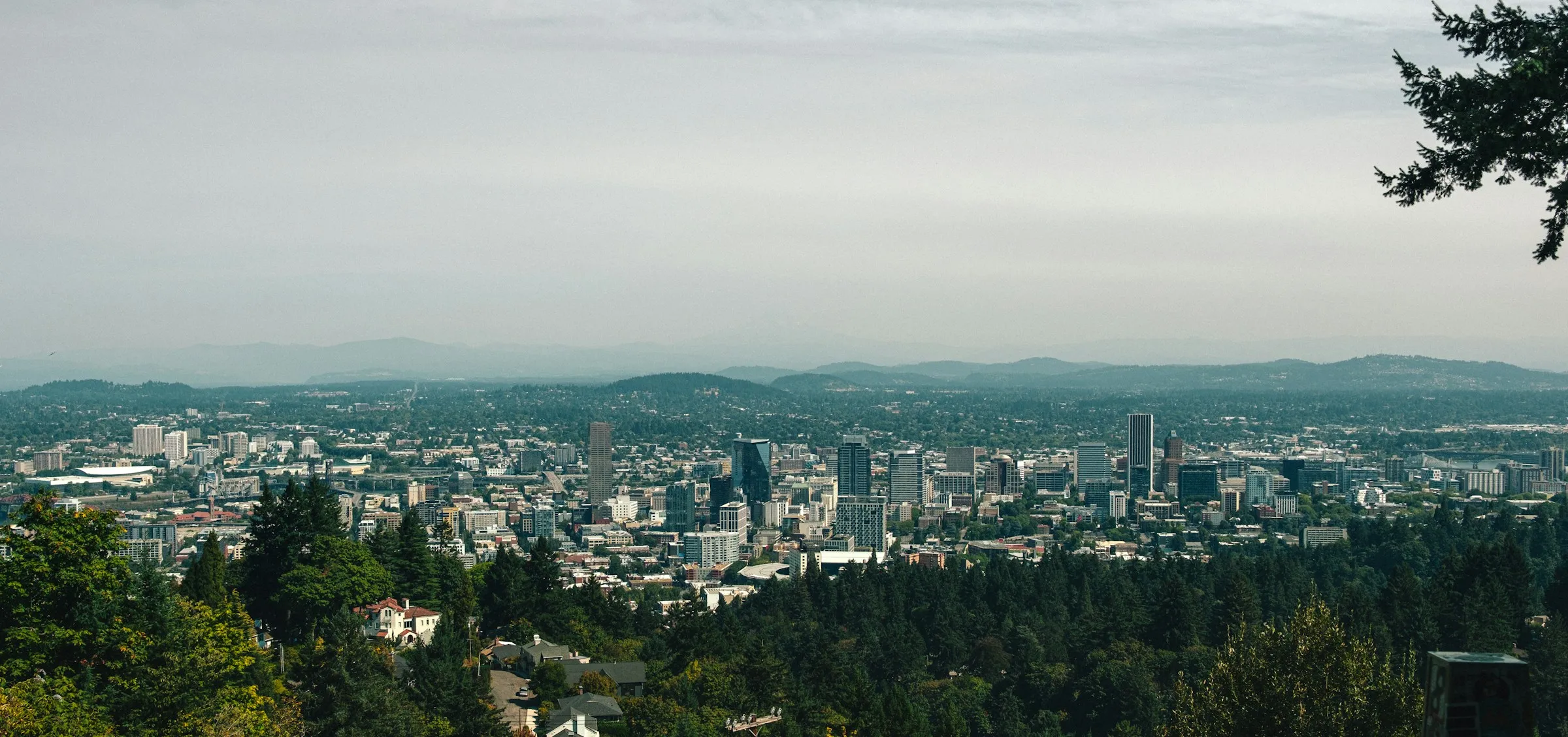
Portland also benefits from its geography. The city sits at the confluence of the Willamette and Columbia rivers, with Mount Hood as a backdrop. This natural setting gives outdoor events a visual character that's hard to replicate. And the transit infrastructure (light rail, streetcar, bus network) means attendees can reach most venues without a car.
Best Venues & Outdoor Spaces
Portland's venue options span waterfront parks, historic estates, fairgrounds, and pastoral farmland. Your venue choice drives everything from your site map layout to your vendor placement strategy, so choose based on your event's scale and personality.
Tom McCall Waterfront Park is Portland's flagship festival venue: 30 acres along the Willamette River in downtown, with the city skyline on one side and the river on the other. It handles the Waterfront Blues Festival (120,000+), Rose Festival CityFair, and Cinco de Mayo Fiesta with proven infrastructure for massive crowds. The park supports multiple simultaneous stages, and proximity to downtown transit, hotels, and restaurants makes logistics simpler. The trade-off is that this is a high-demand space; book through Portland Parks early.
Pendarvis Farm in Happy Valley offers the opposite experience: 80 acres of forest and meadows where Pickathon builds an immersive "Creative Neighborhoods" experience each summer. If your festival concept depends on atmosphere and escapism rather than urban convenience, this is the model. It's 30 minutes from downtown, with camping and on-site parking.
For mid-size events, Director Park in downtown provides a modern urban plaza with a glass canopy (useful for Portland's shoulder-season weather) and excellent transit access. McMenamins Edgefield in Troutdale is a 74-acre historic estate with an outdoor amphitheater, gardens, and on-site lodging, making it turnkey for multi-day events. Don't overlook Cathedral Park beneath the St. Johns Bridge; its dramatic setting hosts the Cathedral Park Jazz Festival and works beautifully for events up to 15,000.
Navigating Permits & Regulations
Portland's permitting process is more organizer-friendly than most cities, largely because the Portland Events & Film Office acts as a single navigator across all city bureaus. Start there. For a broader overview of what permits festivals typically require, see our complete permits and licensing guide.
Block Party Permits are free and cover neighborhood-scale events on up to two blocks, with street closures limited to eight hours between 9 AM and 9 PM. No alcohol, no commercial activity. This is ideal for testing a concept or running a small community event.
Community Event Permits cover larger events like street fairs, farmers markets, and cultural festivals requiring street closures. Costs vary by event size and the level of city coordination needed. The Portland in the Streets team at PBOT handles these applications.
Special Event Permits are for major productions at parks, plazas, and large outdoor spaces. These require coordination across multiple bureaus (parks, police, fire, transportation) and the Events & Film Office will guide you through the process.
Insurance is required for all permitted events. The city offers a cost-effective option called TULIP (Tenants User Liability Insurance Program), which covers most event types and includes optional liquor liability. This is significantly cheaper than sourcing your own policy.
Alcohol requires an Oregon Liquor & Cannabis Commission (OLCC) license. Your servers need OLCC certification, and your site map should clearly identify every alcohol sales location.
Key timeline: Start conversations with the Events & Film Office at least 60 days before your event. For large festivals, 90+ days is safer. The city's online Development Hub PDX portal handles formal submissions.
Weather & Seasonal Planning
Portland's weather creates one of the clearest festival windows in the country: June through September is nearly rain-free, while October through May is consistently wet.
July and August are the prime months. Average highs sit around 80-83°F, humidity is low, and rainfall averages less than half an inch per month. Daylight extends past 9 PM, giving you long evening programming windows. This is when the Waterfront Blues Festival, Pickathon, Cathedral Park Jazz Fest, and most street fairs run. The only risk is occasional heat waves pushing above 90°F; plan for water stations and shaded rest areas.
June and September are excellent secondary windows. June averages around 73°F with under an inch of rain. September holds at 76°F with about an inch of rain, and the light is beautiful for outdoor events. The Rose Festival runs in late May through early June and catches the front edge of the dry season.
October through May is a different story. Portland averages 37 inches of rain annually, and nearly all of it falls in these months. November and December are the wettest. If you're planning a fall or winter event, you need covered structures, tent rentals, or indoor backup venues. The glass canopy at Director Park is one of the few downtown outdoor spaces that works year-round.
Plan for layers. Even in summer, Portland mornings and evenings can drop into the mid-50s. Communicate temperature ranges to attendees.
Local Food, Music & Culture
Portland's food culture is a competitive advantage for any festival. The city's 600+ food carts represent one of the densest street food ecosystems in the country, spanning cuisines from Thai and Ethiopian to Korean-Mexican fusion and artisanal ice cream. For food festivals, this means you can build a vendor lineup of extraordinary depth without recruiting outside the metro area. If you're building your vendor roster from scratch, our guide on how to recruit food vendors covers where to find them and how to structure the relationship.
Beyond food carts, Portland's craft beverage scene runs deep: 40+ breweries, a growing natural wine community, and distilleries producing everything from gin to whiskey. Beer-focused festivals draw reliably large crowds here.
Musically, Portland spans indie rock, folk, blues, jazz, electronic, and hip-hop, with a scene that prioritizes discovering emerging talent over booking safe headliners. Pickathon built its reputation on booking artists before they break (Khruangbin, Big Thief, Billy Strings all played early). Audiences here will respond to a well-curated lineup of unknowns more enthusiastically than a generic festival bill. Solid vendor placement near stages keeps the energy flowing between sets.
The arts and maker culture is equally strong. Portland Saturday Market has run continuously since the 1970s, and neighborhoods like Alberta, Mississippi, and Division have monthly art walks and active gallery scenes. Interactive art installations, maker workshops, and live murals all perform well at Portland festivals.
Logistics & Transportation
Portland's transit system is a genuine asset for festival organizers. TriMet operates four MAX light rail lines, a streetcar, and extensive bus routes that connect most festival venues to neighborhoods across the metro. The Rose Festival actively promotes MAX as the primary way to reach parade routes, and most waterfront events benefit from multiple transit stops within walking distance.
Parking gets more complex during events. Portland uses Event District pricing that increases on-street rates (from $1.80 to $5-7/hour) near major venues when large events trigger activation. This is intentional: the city wants attendees on transit, bikes, or carpools. Communicate transit options clearly in your marketing, and consider partnering with TriMet on shuttle branding for larger events.
Load-in/load-out for waterfront venues uses Naito Parkway and downtown service access points. Coordinate street closures through your permit. For neighborhood street fairs, loading zones need coordination with local merchants. Plan early morning load-in before business hours.
Hotels cluster downtown (The Benson, Hilton Portland, Hyatt Regency, The Ritz-Carlton Portland) and along transit corridors. For multi-day festivals expecting out-of-town attendees, negotiate room blocks early. Portland's tourism calendar fills hotels during summer festival season. Budget-conscious groups can look at the NW Portland Hostel, which accommodates groups of 10-100. For a full breakdown of what these costs look like, check our festival budget planning guide.
Tips from Local Organizers
- Book your summer dates by January. Portland's dry season is short (June-September), and every organizer in the city is competing for the same window. Venue holds and permit applications should go in as early as possible.
- Lean into Portland's sustainability values. Audiences here notice and care. Pickathon runs zero-waste; the Portland Saturday Market prioritizes local makers. Compostable serviceware, recycling stations, and local sourcing aren't just nice-to-haves, they're expected. Our sustainable festival planning guide covers the practical steps.
- Don't underestimate neighborhood street fairs. Mississippi Street Fair draws 30,000+ people to a single street. These events punch well above their weight because Portland neighborhoods have built-in audiences and local business partnerships. Start with a neighborhood before scaling to a park.
- Partner with food carts, not just caterers. Portland's food cart culture is unique, and attendees expect it. A lineup of 10-15 food carts creates more variety and atmosphere than a single catering operation, and cart operators are experienced at high-volume outdoor service.
- Get your vendor contracts right early. Portland's vendor community is collaborative but professional. Clear terms on power, waste, setup times, and revenue sharing prevent day-of problems.
Ready to Plan Your Portland Festival?
Portland has something most cities can't offer: an audience that genuinely loves outdoor events, a summer weather window that's nearly perfect, and a creative culture that rewards originality over formula. The 120,000 people who show up for the Waterfront Blues Festival every July aren't an anomaly. They're Portland being Portland.
Whether you're testing a concept at a neighborhood street fair or building a multi-day production at Tom McCall Waterfront Park, the infrastructure, vendors, and audience are here. If this is your first event, our first-year festival guide covers how to compete with established festivals from day one.
Tools like FestKit can help you map your site, manage your vendors, and share interactive maps with attendees so you can focus on the programming that makes your festival worth attending.
Ready to start planning? List your event on FestKit and take vendor applications for free. The site plan and live attendee maps are there when you want them. Start free.
Free to list · Free to take applications
Open applications.
Start filling the roster.
Get discovered by vendors, collect what they owe, and keep every application moving. Start free. Upgrade when you are ready to coordinate opening day across every event.
$0 to start
and it never expires
Self-serve
set up in minutes
14-day trial
of everything else
2% on vendor payments · No subscription required