
Festival Planning · For organizers
Festival Weather Contingency Planning: Build a Plan Before the Sky Turns
Build a festival weather contingency plan that keeps attendees safe. Learn action thresholds, evacuation triggers, and severe-weather protocols for outdoor events.
The Best Weather Plan Is the One You Wrote Before the Clouds Rolled In
Introduction
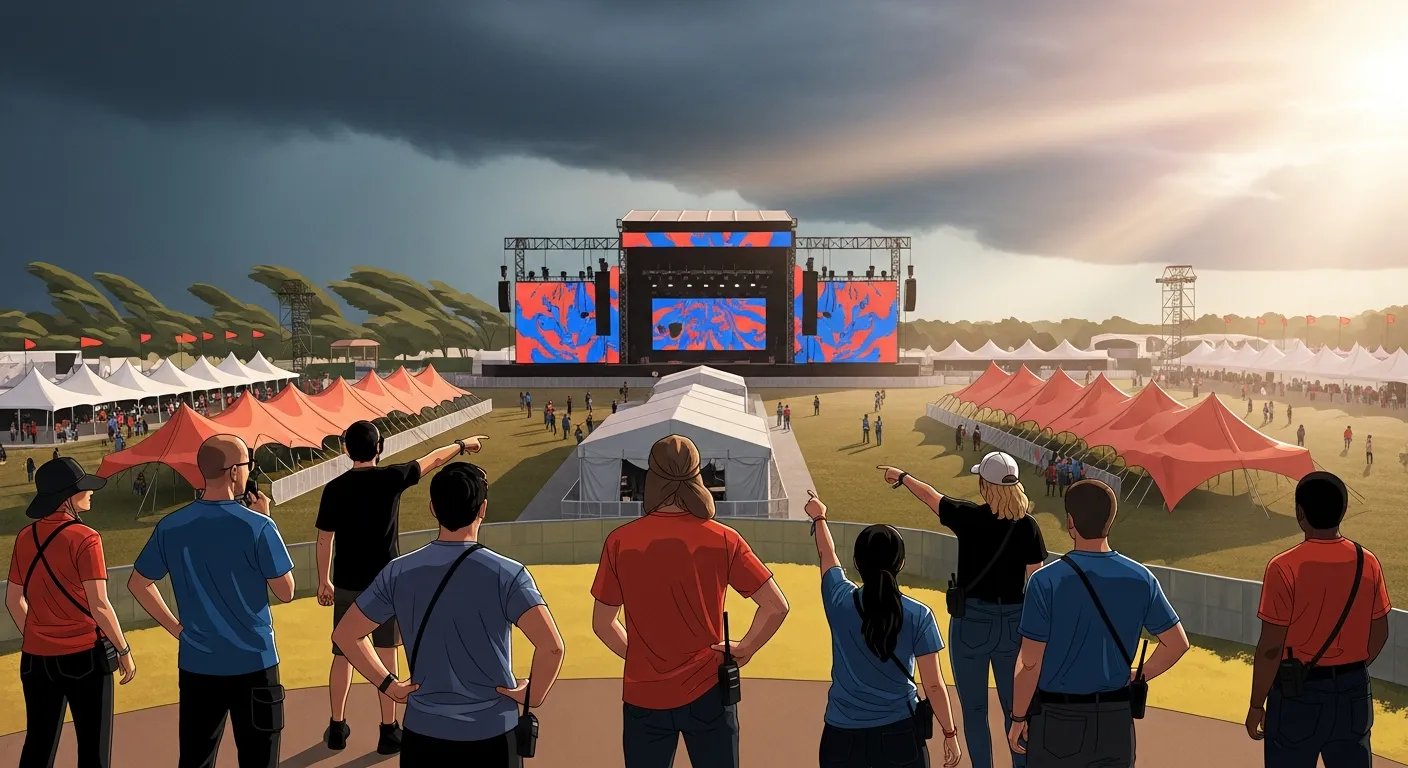
Every outdoor festival is one storm cell away from its hardest decision of the year. When lightning appears on the horizon and 8,000 people are packed in front of a main stage, you don't have time to figure out who makes the call, where people go, or how you tell them. You need those answers already written down, rehearsed, and sitting in every team lead's pocket.
Weather is the one risk you can't schedule around and can't fully control. What you can control is your response. This guide walks through how to build a severe-weather action plan that protects attendees, keeps your team aligned, and gives you the confidence to act early instead of hoping the storm passes.
Why Weather Contingency Planning Matters
A weather plan isn't paperwork you file to satisfy your permit office. It's the difference between an orderly hold and a panicked crowd surge toward blocked exits. Outdoor events concentrate thousands of people in open ground, often around temporary structures like stages, tents, and rigging that were never built to take a sudden 50 mph gust.
The decisions happen fast, and they happen under pressure. Do you pause the show or evacuate? Who has authority to stop production? Where do people shelter when there's no permanent building on site? If your team is debating those questions while the wind picks up, you've already lost the time you needed.
A written plan removes the debate. It defines the triggers, names the decision-maker, and maps the response so your team executes instead of improvises. That clarity is what keeps a weather event from becoming a safety incident.
Key Elements of a Severe-Weather Action Plan
Clear Action Thresholds
Vague plans fail because "if it gets bad" means something different to everyone. Set specific, measurable triggers tied to conditions. For lightning, the widely used 30-30 rule from the National Weather Service says if you count 30 seconds or less between a flash and thunder, suspend activity and clear open areas, then wait a full 30 minutes after the last thunder before resuming. Many operations plans set a wind trigger to strike or evacuate temporary structures well before gusts reach the mid-range where staging becomes unstable, and monitor heat index for extreme-heat protocols.
A Single Decision-Maker
One person must own the go, hold, or evacuate decision, with a named backup. This is usually a safety officer or event director working from a defined weather-monitoring source. When authority is shared, nobody acts. When it's clear, the call happens in seconds.
Defined Shelter and Evacuation Zones
Open festival grounds rarely have obvious shelter. Identify hardened structures, vehicles, or designated evacuation points in advance, calculate how long a full clear takes, and make sure your access lanes stay open for that flow. Attendees can't shelter in a plan they've never heard of.
A Way to Reach Everyone at Once
A decision means nothing if the crowd doesn't hear it. Combine stage announcements, PA, staff relays, and a digital channel attendees already have on their phones so the same message reaches everyone before conditions worsen.
7 Steps to Build Your Festival Weather Plan
-
Assign a weather monitor and a decision-maker. Name both roles, plus backups, before the event. Give the monitor a dedicated weather service or on-site meteorologist rather than a phone app and a guess.
-
Set your specific triggers in writing. Define the exact conditions for pause, shelter, and full evacuation. Write them as numbers and rules, not feelings, so any team lead reads them the same way.
-
Map your shelter and evacuation zones. Identify where people go, mark the routes, and confirm those paths stay clear during the event. Time a full evacuation so you know how much lead time you actually need.
-
Write the announcement scripts now. Pre-draft calm, direct messages for each scenario. Reading a prepared script under pressure prevents the mixed signals that cause panic.
-
Brief every team lead and vendor. Everyone from stage managers to food vendors should know the triggers, the signal to act, and their role when it fires. Run the plan verbally at your all-hands before doors open.
-
Build in early decision points. The safest evacuations start before the storm arrives, not during it. Set a "prepare to hold" stage that gives your team a head start on the "evacuate now" call.
-
Rehearse the worst case. Walk the full evacuation on your map with department leads. Where does the crowd bottleneck? What happens if the headliner is mid-set? Tabletop drills surface the gaps you can still fix.
Common Weather Questions Organizers Face
-
Who should have authority to stop the show? One designated safety lead or event director, with a clear backup. Production, security, and stage managers execute the call, but the decision needs a single owner.
-
How early should we start an evacuation? Earlier than feels comfortable. Build a "prepare" phase ahead of your evacuate trigger so you're moving people while conditions are still manageable, not after the first strike.
-
What if attendees ignore the announcement? Repetition and consistency help. Use multiple channels at once, keep the message calm and specific about where to go, and position staff to guide flow rather than just deliver news.
-
We have no permanent buildings on site. Where do people shelter? Cars are viable lightning shelter, and you can designate hardened structures nearby or a phased dispersal to parking. The key is deciding this before the event, not during it.
-
How do we handle extreme heat, not just storms? Treat heat as its own trigger. Plan shade, water stations, cooling areas, and messaging around the hottest hours, and watch the heat index for your action point.
Expert Tips for Weather-Ready Festivals
Trust a Real Forecast Source
A consumer weather app is fine for deciding what to wear. It's not enough to move thousands of people. Contract a dedicated event weather service or on-site meteorologist who can give you site-specific lead time and a direct line during the event. That lead time is what lets you decide early.
Make the Plan Findable, Not Filed
A plan buried in a shared drive helps no one at 4 PM on show day. Put the triggers, roles, and evacuation zones on a one-page card every lead carries, and put the shelter locations on the same map your team already uses to run the site.
Communicate With Attendees Before You Need To
Tell attendees your weather policy before the event and remind them at the gate. When people already know there may be a hold and where to go, the actual announcement lands as reassurance instead of alarm.
Plan for the Storm, Run the Show With Confidence
Weather will always be the variable you can't remove. But a festival with clear triggers, a named decision-maker, mapped shelter zones, and a way to reach every attendee turns a frightening moment into a managed one. The teams that handle severe weather well aren't lucky. They decided everything in advance.
Build your plan on paper, mark your safe zones and evacuation routes on your site map, and make sure you can push a message to every phone on the grounds in seconds. FestKit helps you map those zones and broadcast live alerts to attendees, so when the sky changes, your response is already in motion.
Running an event? List it on FestKit and take vendor applications for free. The site plan and live attendee maps are there when you want them. Start free.