
Industry Trends · For organizers
The Rise of Micro-Festivals: Why Smaller Events Are Thriving
Discover why micro-festivals are booming and how organizers can launch intimate, niche events with lower costs, loyal audiences, and stronger community impact.
Smaller Festivals Are Winning - Here's Why Organizers Are Paying Attention
Introduction
Over 100 music festivals worldwide were cancelled or went on hiatus in 2025. Meanwhile, intimate niche events are selling out year after year with loyal audiences who keep coming back. The festival industry is shifting - and the smart money is on going smaller.
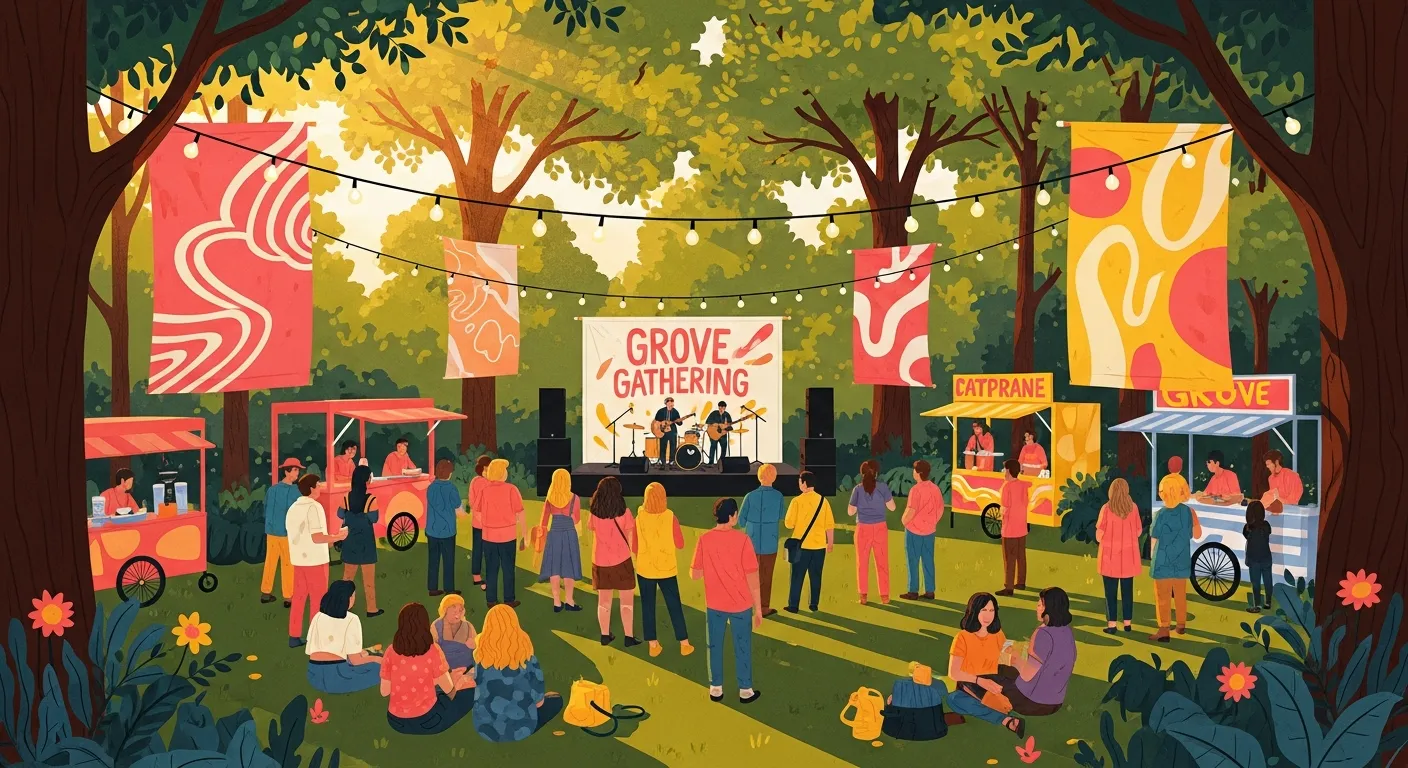
Micro-festivals, typically hosting under 5,000 attendees with focused themes and shorter run times, are emerging as one of the strongest trends in live events. For organizers, they offer a lower-risk path to building something meaningful. For attendees, they deliver the curated, community-driven experiences that massive festivals can't match. Here's what's driving the movement and how you can capitalize on it.
Why Micro-Festivals Are Growing
The collapse of big festivals isn't random. Skyrocketing production costs, post-pandemic debt, and declining ticket sales for multi-genre lineups have made the mega-festival model increasingly fragile. KAABOO in San Diego lost $69 million over five years before shutting down. Wonderfront lost its spring 2026 slot after years of financial struggles.
Micro-festivals sidestep these problems entirely. With smaller venues, leaner teams, and audiences that buy tickets for the experience rather than a specific headliner, they operate on fundamentally different economics. Production costs are manageable. Permitting is simpler. And when your audience is passionate about a specific niche - whether that's Cajun music, natural wine, or electronic dance music - you don't need a $2 million headliner to sell tickets.
Younger generations are accelerating this shift. They're drawn to curated, affordable experiences over generic mega-events. They want to feel like they're part of something, not lost in a crowd of 50,000 strangers. Micro-festivals deliver exactly that.
Key Advantages of the Micro-Festival Format
Lower Financial Risk
A community-focused micro-festival can launch with a budget of $20,000 to $50,000 - a fraction of what large festivals require. Using local or emerging artists with booking fees under $5,000 per act, securing public venues, and relying on a volunteer-based crew keeps overhead manageable. You don't need to bet six figures on a lineup and hope the tickets sell.
Stronger Audience Loyalty
Niche audiences are repeat audiences. Events like San Diego's CRRSD electronic music festival routinely sell out because attendees buy tickets for the genre itself, not individual artists. Gator by the Bay, a Louisiana-themed Cajun and Zydeco festival, has been running since 2001 with a devoted following. When your event has a clear identity, your audience markets it for you.
Simpler Operations
Fewer attendees means fewer moving parts. Permitting for a 500-person event is a different world than permitting for 15,000. You need fewer restrooms, less security, simpler sound infrastructure, and a smaller operations team. This makes micro-festivals accessible to first-time organizers who don't have a decade of production experience.
Deeper Community Connection
Small events create the intimacy that large festivals can't replicate. Attendees interact directly with artists, vendors, and each other. There's no VIP barrier between the crowd and the stage. This sense of belonging turns casual attendees into evangelists who bring friends next year and spread the word organically.
How to Niche Down and Find Your Audience
-
Pick a theme people already gather around. Look for existing communities: local homebrew clubs, yoga communities, indie music scenes, maker spaces, cultural associations. Your first audience already exists - you're giving them a flagship event.
-
Define your format tightly. A "food and music festival" is too broad. A "wood-fired pizza and jazz festival" is a niche. The more specific your format, the easier it is to market, program, and attract sponsors who want that exact audience.
-
Start with a single day. One-day events have significantly lower costs (no overnight infrastructure, camping, or multi-day staffing) and lower attendee commitment. Prove the concept before expanding to a weekend.
-
Partner with local businesses. Breweries, restaurants, art galleries, and studios make natural co-hosts. They bring built-in audiences, venue options, and shared marketing muscle. A micro-festival co-hosted with three local breweries already has their combined email lists working for it.
-
Choose a venue that fits the vibe. Warehouses, rooftops, farms, parks, and courtyards all create atmosphere that convention centers can't. The venue is part of the experience at a micro-festival - pick one that reinforces your theme.
-
Price tickets to remove friction. Micro-festival tickets often land under $50, making it an easy impulse purchase. You can add premium tiers (early access, meet-and-greets, curated tasting sessions) for attendees willing to pay more without pricing out your core audience.
Common Questions From Aspiring Organizers
-
Can I actually make money with a small festival? Many first-year festivals break even or operate at a small loss, treating it as a marketing investment. By year two or three, with a proven audience and sponsor interest, profitability becomes realistic. Ticket sales typically account for 60-75% of revenue, with vendor fees and sponsorships filling the gap.
-
How do I attract sponsors for a small event? Local sponsors care about audience fit, not raw attendance numbers. A 300-person craft beer festival is more valuable to a regional brewery than a generic 10,000-person event. Pitch the niche, not the scale.
-
What if I don't have event experience? That's precisely why micro-festivals work for newcomers. You're managing hundreds of people, not tens of thousands. The logistics are learnable at this scale, and mistakes are recoverable. Start small, learn fast, and grow deliberately.
-
Do I need a full production team? Not initially. Many successful micro-festivals launch with a core team of 3-5 people plus volunteers. As the event grows, you can professionalize specific roles - but don't over-staff your first year.
-
How do I differentiate from other small events in my area? Theme and curation. Two beer festivals in the same city can coexist if one focuses on sour ales and the other on Mexican craft lagers. The narrower your niche, the less direct competition you face.
Expert Tips for Launching Your Micro-Festival
Build the Community Before the Event
Start building your audience 6-12 months out. Host smaller gatherings, pop-ups, or tastings that introduce people to your theme. By the time tickets go on sale, you're not starting from zero - you're activating a community that already knows you.
Invest in the Details That Matter
At a large festival, no one notices the napkins. At a micro-festival, everything is part of the experience. Custom signage, thoughtful vendor curation, a cohesive visual identity, and a well-designed site layout signal professionalism and care. These details are what attendees photograph and share.
Use Professional Tools Even at Small Scale
A 500-person festival still needs a clear site map, organized vendor placements, and a communication plan. Using digital planning tools - rather than spreadsheets and group texts - saves time and prevents the operational chaos that kills first-year events. Professional tools aren't just for big festivals; they're especially valuable when your margin for error is thin.
Plan Your Second Year Before the First One Ends
Capture emails. Survey attendees. Document what worked and what didn't. The biggest advantage of micro-festivals is how quickly you can iterate. Your second event can be dramatically better than your first - but only if you build that feedback loop from day one.
The Future of Festivals Is Focused
The festival landscape is splitting in two. On one side, massive corporate events with eight-figure budgets and uncertain futures. On the other, focused micro-festivals built on passion, community, and sustainable economics. The second path is more accessible, more resilient, and - for many organizers - more rewarding.
You don't need a million-dollar budget to create something people remember. You need a clear niche, a dedicated audience, and the operational discipline to execute well at any scale. The micro-festival movement isn't a trend that will fade - it's the future of how communities gather.
Running an event? List it on FestKit and take vendor applications for free. The site plan and live attendee maps are there when you want them. Start free.