
Industry Trends · For organizers
Festival Accessibility: Going Beyond ADA Compliance to Create Truly Inclusive Events
Learn how to make your festival accessible beyond ADA minimums with sensory-friendly zones, inclusive site design, and staff training that welcomes every attendee.
93% of Disabled Attendees Face Barriers at Events - Here's How Your Festival Can Do Better
Introduction
ADA compliance is the floor, not the ceiling. One in four US adults - 61 million people - lives with a disability, yet 93% of disabled attendees report encountering barriers at events they attend. That's not a niche problem. It's a systemic failure that costs festivals real revenue, real reputation, and real audience loyalty.
The gap between "we have accessible restrooms" and "disabled attendees actually feel welcome" is where most festivals fall short. This guide walks you through what ADA requires as a baseline, then shows you how to build genuinely inclusive experiences - from sensory-friendly quiet zones to accessible site map design - that expand your audience and strengthen your brand.
Why Festival Accessibility Matters More Than You Think
The business case is straightforward. People with disabilities control $490 billion in annual spending power in the US alone - $8 trillion globally. Yet 52% of disabled music fans actively avoid concerts and festivals due to poor accessibility. That's not a lack of demand. It's a supply problem.
Beyond revenue, accessibility shapes your festival's reputation in ways that compound over time. Disabled attendees don't attend alone - they bring companions, friends, and family who all buy tickets, food, and merchandise. Festivals known for exceptional accessibility earn word-of-mouth loyalty from a community that actively shares recommendations. And sponsors increasingly prioritize events that demonstrate genuine inclusivity over ones that check minimum legal boxes.
The disconnect is striking: 91% of venues claim to provide accessible toilets and 82% report step-free access, but the attendee experience tells a different story - inaccessible layouts (28%), untrained staff (25%), overstimulating environments (27%), and missing accessibility information (17%) remain persistent complaints.
Key Elements of Accessible Festival Design
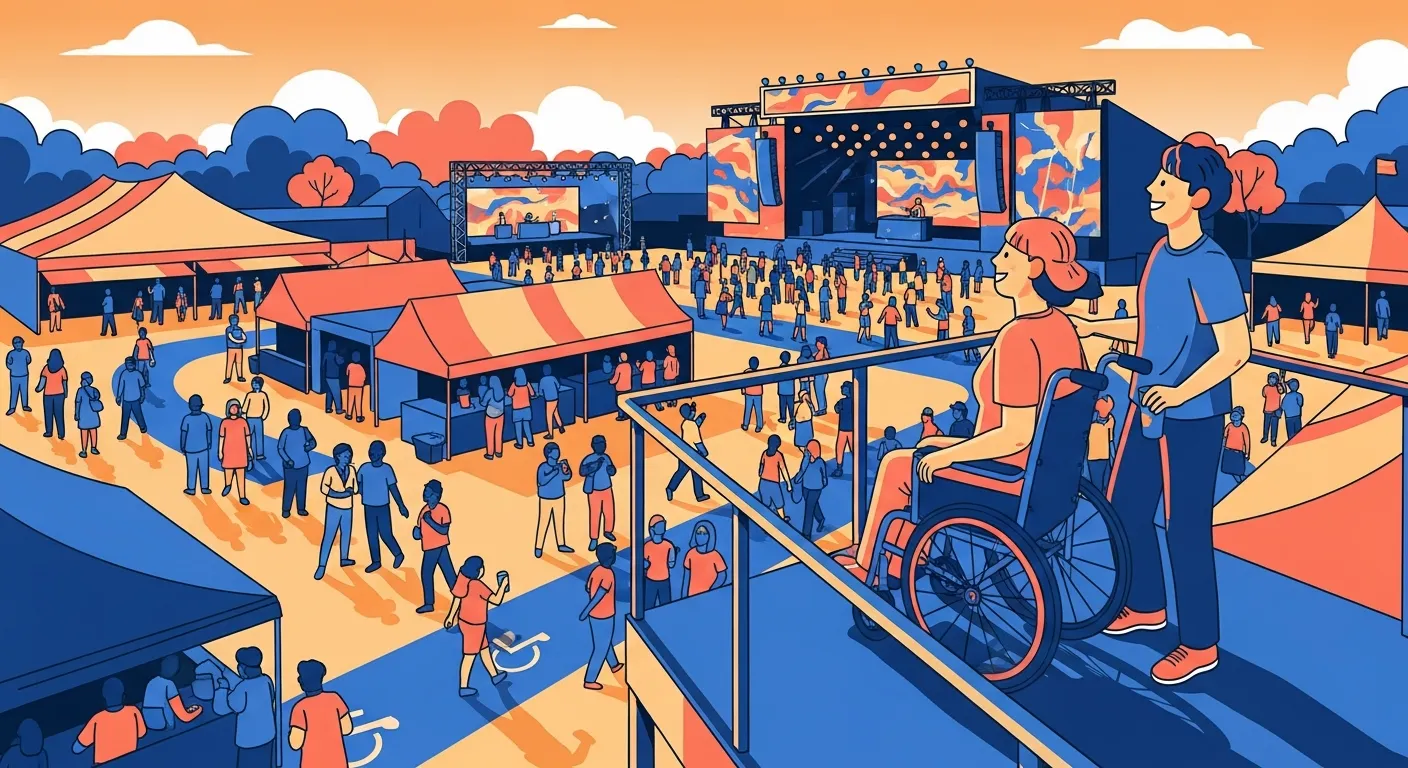
Build a Network of Firm, Wide Pathways
ADA requires accessible routes at least 36 inches wide with stable, firm surfaces. But wheelchair users navigating a multi-stage festival need more than minimum-width corridors. Design pathways at 48-60 inches to allow bidirectional traffic and let companions walk alongside. For outdoor sites on grass or dirt, temporary solutions like rubber matting, plastic trackway panels, or portable ADA mats transform muddy fields into navigable corridors. Glastonbury lays down sturdy trackway panels across its hilly farmland terrain, proving that even challenging sites can achieve solid accessibility.
Design Viewing Platforms at Every Stage
Accessible viewing areas that are stuck behind standing crowds are functionally useless. Place raised platforms with clear sightlines at every performance area - not just the main stage. Bonnaroo provides elevated viewing platforms at multiple stages plus golf cart shuttles between them. Download Festival rotates platform positions to give wheelchair users vantage point options. Include folding chairs for attendees who can't stand for long periods but don't use wheelchairs - chronic pain and fatigue are invisible disabilities that affect a large number of festivalgoers.
Create Sensory-Friendly Quiet Zones
Overstimulating environments are the second-most-cited barrier for disabled attendees. Festivals are loud, bright, crowded, and intense - conditions that can trigger sensory overload for people with autism, ADHD, anxiety, or PTSD. Glastonbury now operates multiple Sensory Calm Tents stocked with weighted blankets, ear defenders, adjustable lighting, and varied textures. These aren't just accommodations for neurodivergent attendees - parents with young children, older adults, and anyone experiencing fatigue use them too. Position quiet zones within easy reach of main activity areas, not tucked away in distant corners.
Provide Communication Access Services
ASL interpretation at headline performances is the most visible accessibility win a festival can deliver. Lollapalooza and Rock in Rio position interpreters alongside performers, with some projecting them on jumbotrons so Deaf attendees can watch both simultaneously. For blind and low-vision attendees, audio description services narrate the visual elements of performances - performer positions, costumes, crowd reactions - through a secondary audio channel. These services don't just meet legal obligations - they create viral moments and genuine community goodwill.
6 Steps to Build an Accessibility Program
-
Audit your site before you commit to a venue. Walk the entire grounds in a wheelchair or with a mobility aid. Note grade changes, surface conditions, distances between amenities, and any barriers that aren't obvious when walking unassisted. If possible, involve disabled consultants in site selection.
-
Publish detailed accessibility information before ticket sales. Describe what accommodations you offer, how to request them, and what the site terrain is like - honestly. Include photos of pathways, maps showing accessible routes, and clear contact information for accessibility questions. Don't make attendees guess.
-
Add an accessibility needs form to your ticketing flow. Ask attendees what accommodations they need at the point of purchase - personal care assistant companion tickets, wheelchair platform access, sensory-friendly seating, ASL interpretation requests. This gives you data to plan capacity and prevents day-of scrambling.
-
Design for the full spectrum of disability. Mobility, vision, hearing, cognitive, and sensory needs all require different solutions. Accessible restrooms help wheelchair users. Quiet zones help neurodivergent attendees. ASL interpreters help Deaf fans. Large-print signage and high-contrast wayfinding help people with low vision. Don't optimize for one type and neglect the rest.
-
Train every staff member and volunteer on disability awareness. Front-line staff who don't understand accessibility create barriers even when infrastructure is solid. Training should cover how to offer assistance without being patronizing, recognizing signs of sensory overload, guiding visually impaired attendees, and communicating with Deaf or hard of hearing patrons.
-
Collect feedback from disabled attendees after every event. Send targeted surveys, host post-event accessibility review sessions, and track complaints by category. The festivals that improve fastest are the ones that listen to the people they're trying to serve - not the ones that assume compliance equals inclusion.
Common Questions About Festival Accessibility
-
Does accessibility infrastructure cost a lot? Some items require investment - trackway panels, viewing platforms, ASL interpreters - but many improvements are low-cost: better signage, staff training, pre-event communication, and quiet zones need minimal budget. The return comes through expanded attendance and reduced liability exposure.
-
What if our site has steep terrain? ADA limits ramp slopes to 1:12 - a 12-inch rise needs a 12-foot ramp. For steep sites, consider alternative accessible routes, portable ramps for curb edges, or golf cart shuttle services between stages. Download Festival uses metal roadway paths around arena areas on difficult terrain.
-
How do we handle accessibility for general admission / standing-room events? Designate elevated viewing platforms near each stage with dedicated accessible entry points. Ensure accessible routes lead directly to these areas. Some festivals reserve a section of the front-of-stage area for wheelchair users and companions.
-
Should we charge for accessibility accommodations? No. Nearly half of venues that charge for accessibility adjustments face backlash - disabled attendees overwhelmingly view this as discriminatory. Accessibility is a right, not a premium upgrade. Build the cost into your general budget.
-
How do we avoid "accessibility theater" - looking good without delivering? Involve disabled people in planning, not just as consultants but as staff and decision-makers. Test your accommodations with actual users before the event. Report specific outcomes honestly: "We served 340 attendees at accessible viewing platforms across 4 stages" is credible. "We're committed to accessibility" without numbers is marketing.
Expert Tips for Inclusive Festivals
Start With Your Highest-Traffic Areas
You don't need to make every square foot accessible overnight. Focus first on the routes between parking, main stages, food vendors, and restrooms - these are the pathways every attendee uses most. Get those right, then expand to secondary areas in subsequent years.
Partner With Disability Organizations Early
Local disability advocacy groups, Centers for Independent Living, and accessibility consultants can review your site plan, train your staff, and connect you with disabled community members who'll provide honest feedback. These partnerships cost less than you'd expect and prevent expensive mistakes.
Make Accessibility Information Findable, Not Buried
Your accessibility page shouldn't be four clicks deep on your website. Feature it prominently in navigation, link to it from your ticketing page, and include key details in pre-event emails. If attendees can't find your accessibility information, it might as well not exist.
Inclusion Is the Standard Your Attendees Already Expect
Festival accessibility isn't a charitable gesture - it's a competitive advantage that serves one of the largest underserved audiences in live events. The festivals that invest in genuine inclusion today are building brand loyalty, expanding their addressable market, and creating experiences that every attendee benefits from.
Start by auditing your site, training your staff, and asking disabled attendees what they actually need. The gap between compliance and inclusion closes one intentional decision at a time. Tools like FestKit's interactive site mapping make it easier to plan accessible routes, mark viewing platforms, and communicate your layout to attendees before they arrive.
Running an event? List it on FestKit and take vendor applications for free. The site plan and live attendee maps are there when you want them. Start free.